Red checks the calendar and realizes he’s almost missed his window. The traveling traders based out of Skarzysko-Kamienna should be back in Opoczno, but this is their last day. He grabs a few valuables from the team’s stash and jumps in the UAZ-469 with Leks. The two men roar south in a cloud of dust.
A few hours of wheeling and dealing later (with time also taken out for professional haircuts and shaves from Opoczno’s resident barber), they’re loading their purchases into the UAZ for the return trip. Here’s what the merchants had on offer (courtesy of my regional economy spreadsheet and some random loot generator rolls); items in bold are what the guys decided to negotiate for:
Jarek Grzeskiewicz’s Trade Caravan
Jarek and his team barter at d10+d10.
pruning hook
countertop grain mill
set of dental tools
set of high-end copper cookware (everyone knows how Magda will react to this)
stylish white tropical linen jacket in Leks’ size
complete navy blue men’s business suit in Red’s size
handmade brown wool cloak
stonewashed denim jacket in Arkadi’s size
complete clown costume that Red might fit into
synthetic baselayer top in Magda’s size
black leather trench coat in Lek’s size
1 industrial-sized cylinder of acetylene (arguably the biggest prize here, as this will enable the team to get their welding torch online and fix the OT-64’s armor and amphibious capability)
2 doses of synthetic mescaline (price per dose)
10 rounds of 12 gauge buckshot ammo
Colt Detective Special w/ 9 rounds of .38 Special ammo
Opoczno Merchants
The resident merchants barter at d10+d8.
HO-scale model train set (1976 50th anniversary commemorative set for Polish State Railways)
bone-handled skinning knife
chemical warfare detector
handheld laser rangefinder
2 dairy cows (price per cow)
5x 5kg sacks of oats (price per sack)
bottle of shaving lotion
spray can of insect repellent (with DEET!)
2L bottle of motor oil (Zenobia arguably would shank both of them if they left this on the table)
5x 10kg sacks of potting soil (price per sack)
21 doses of medical-grade morphine (price per dose)
3 weapon parts (price per part)
1 case of Soviet 40mm grenades (100 rounds)
1 belt (100 rounds) of .50 BMG ammo
Steyr AUG w/ 2 full magazines (30 rounds 5.56mm each)
At the end of the day, our traders come away with this bounty for the price of a couple more of their gold bars and their collection of uncut sapphires. Somewhere out there, someone must be putting together a real economy again…
(They don’t currently have a 40mmS grenade launcher, but they remember leaving an ex-ZOMO one with the north farms, so there’s a deal to be made there. The farmers probably will be willing to hand that over in exchange for another full belt for their recently-donated M2HB.)
Red also checks in with the merchant who’s his contact with the Polish Home Army company operating out of Skarzysko-Kamienna. The intel he receives may change the course of the campaign. The partisans have hit a few more Soviet convoys and platoons. After the last one, they saw a Soviet quick reaction force arrive from the direction of Radom. They expected something along these lines, and it looks like the ZOMO garrison there has been reinforced.
More importantly, they’ve also spotted two eastbound groups of what appeared to be POWs: each 20-30 people on foot guarded by 10-12 Soviet troops on horseback. They didn’t hit those because of the risk to the prisoners. They weren’t able to get positive IDs, but they believe the prisoners were Americans being taken to the camp in Radom…
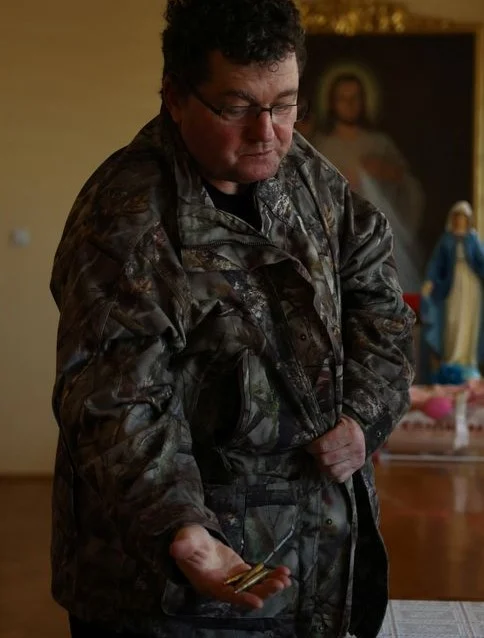
The player behind Magda sent me this as her contribution to the 15 August holiday downtime. It’s posted with her permission (and with the award of some delicious XP).
For context, Magda and her Cook specialty have taken over management of Ponikla’s communal cooking arrangements. Her normal crew is three of the village’s elderly ladies and one of the rescued teenagers from the railyard. They’re doing this for her own good…
Magda stands outside the door of the hostel’s kitchen. Her kitchen. Which is currently being blockaded by two less-than-imposing figures. Tamara’s in the middle of a growth spurt; her spindly elbows jut out as she crosses her arms. Old Antonina’s eyes glint sternly behind her scratched glasses.
“I need to start the bread,” Magda says, confused.
“No, you don’t,” Antonina says. “It’s a rest day. Go rest.”
“It’s a feast day. We need to—”
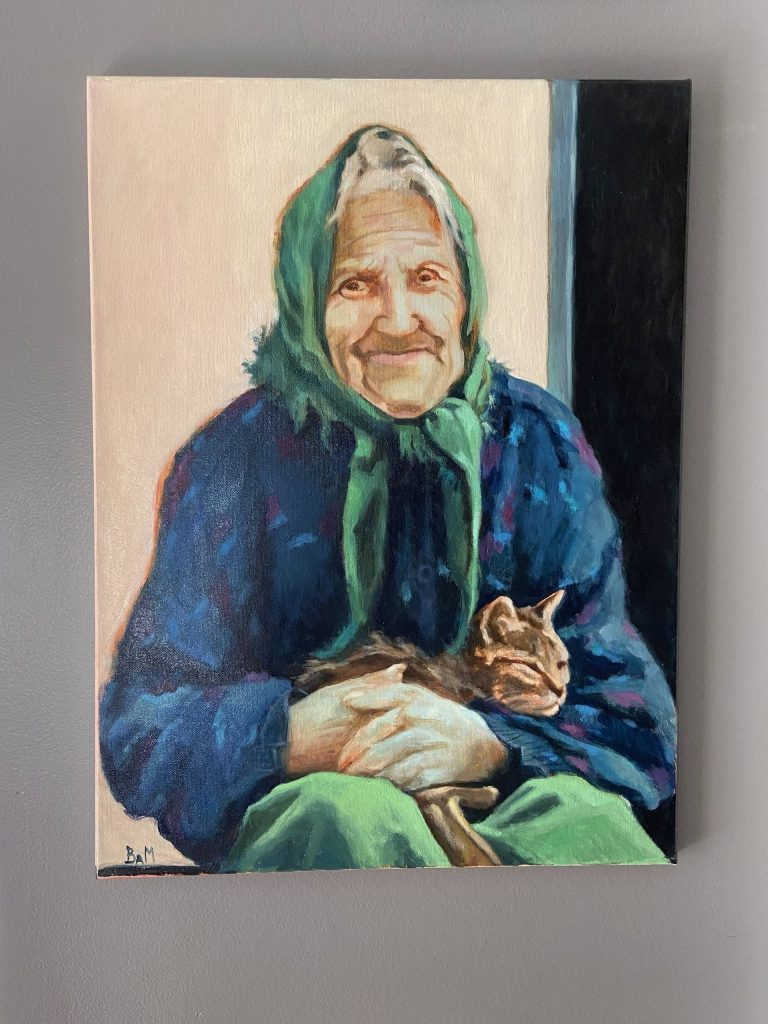
Antonina waves a gnarled hand to silence her. “The last rest day was two weeks ago, and you spent it in here, cooking. If you’re not out scouting or harvesting, you’re in here stirring the soup. You need a day off. We’ll handle everything.”
Magda looks past Antonina for support, but comes up empty. Kazimiera’s wrinkles deepen as she grins and nods decisively. Over by the stove, Josefa glances toward Magda and flips one hand. Off with you, girl.
“If you’re sure…” Magda says.
The door closes in her face, firmly but not unkindly.
Magda looks around the tiny courtyard. Rest? She walks to the gate and stands there for a moment, trying to think of something to do that wouldn’t involve work. Maybe just…go for a walk? She circles around to the hostel’s front door, climbing the stairs to her cubby of a room. When she comes out, she’s got a small pack on her back.
She negotiates at the kitchen door briefly. They still won’t let her in, but Josefa approvingly provides a picnic packet, along with a canteen of water. Magda tucks them into her pack and sets off, hiking northwest through the trees.
Soon enough, she reaches the river and walks upstream until she finds a large, spreading oak. Feeling odd, she climbs up among the branches. She hasn’t climbed a tree since she was a child, but it’s here, and she’s here, and there’s a perfect perch on a large branch not too high up. She settles herself with her back to the trunk, with her pack in front of her.
The river ripples placidly. A warm, gentle wind caresses the long grass on the riverbank. Clouds drift across the sky.
It’s so lovely, so serene, it makes Magda’s chest hurt. A tear drips down one cheek, then the other. She holds herself taut for a moment, then gives up. There’s no one here to see or care. She curls around her backpack and sobs.
It shouldn’t be so beautiful here. How could anything dare to be so peaceful in a world gone utterly insane? In another time, she’d have wanted to share this view with someone, but everyone from before is gone, either dead or lost. At Christmas five years ago, her grandparents’ farm had been a chaotic, jubilant mass, at least fifty people, counting herself and her siblings, parents, uncles, aunts, cousins…not to mention the babies and the people who weren’t family but might as well have been.
Maybe some of them are still alive, somewhere.
She can’t remember the last time she cried like this, huge, racking, coughing sobs, until her throat hurts and salt water runs down her arms. Finally, the ache in her chest eases, and she raises her head, sniffling.
The river burbles, wind riffles the grass, and the clouds float on. Nothing has changed.
Everything has changed.
She opens her pack and pulls out the canteen with quivering hands. After all that foolishness, she’s probably dehydrated. She takes a few careful sips, then hangs the canteen strap off a branch. Josefa’s packet proves to contain a few strips of dried meat, two wheat rolls, a little ceramic tub of fresh cheese, and another of plum jam. A bundle of cloth secured with twine holds what must be the last of the fresh cherries. Despite herself, she smiles through her tears at the kindness.
She remembers buying cherries in a grocery store. Just a little treat. She hadn’t realized then what an unimaginable luxury it truly was.
So much is gone, and wrong, and strange, and not what it was. There was before, and now there is after.
She takes another sip from the canteen and leans her aching head against the warm trunk behind her. She’s tried very hard, up to now, not to think about either of the two worlds. There was simply work to be done, and she did it.
Why? Why does she keep trying? She’s never thought of herself as a survivor. The people who could make it in this new world are people like…like Minka, tough and fearless and capable. Or like Red, whose skills are welcomed and valued anywhere he goes.
The murky river swirls below her. She snaps off a dry twig and lobs it toward the water. It lands without a splash and disappears.
If she never returned to the village, would it matter?
The wind picks up, hissing through the oak leaves, and a branch taps sharply against her leg. She looks down just as the carpet of leaves below rises up, dancing across the ground. The way they spin…she shuts her eyes tightly and clutches the sturdiest branch, holding on against a sudden surge of dizziness.
The wind dies down again. She doesn’t move. Scenes play themselves on the insides of her eyelids: Zenobia and Red, asking Josefa where Magda had gone, why she hadn’t come back. A search party, Leks and Minka and young Miko. Tamara begging to come along to help. Antonina holding her rosary in both hands, a stricken look on her weathered face.
No. She can’t do that to them.
Her friends would put themselves in danger, roaming around to look for her. She can’t tell herself it wouldn’t happen that way. It would.
She matters to them.
They matter to her.
The wind breathes another sigh, ruffling her hair and drying the tears on her cheeks. She opens her eyes and slowly relaxes back against the sturdy trunk.
Antonina can run the kitchen if needed, but she’s not able to climb a cherry tree or shoulder a rifle. Tamara is nigh-ungovernable, with her teenage overconfidence, but she listens to Magda. And what would the others have done in that last fight with the ZOMO if Magda hadn’t turned the BTR’s gunner into barszcz before he could fire at them?
Maybe she’s not ready to think about before or after. But she doesn’t have to. There’s just now.
She pulls a cherry out of the tiny sack and pops it into her mouth, eating around the pit. She’ll save the pits in the sack and bring them back home. Maybe there will be a good place in the village to plant them.
Father Maciej and Wilhelm aren’t done interfering with our protagonists. They’ve been planning a feast day for a while. 15 August is a double holiday in Poland: the feast day of the Assumption of the Virgin Mary and (outlawed under the communist regime but making a comeback in unaligned and NATO-aligned communities) Polish Armed Forces Day. The village took a rest day two weeks ago, but it’s been nonstop work since then, and this is important for morale. So the PCs find themselves with another enforced day off and have to figure out what to do with themselves.
The day is mainly a prep day for the evening’s feast, and an opportunity for everyone to come in from the fields and orchards. Father Maciej is feeling more upbeat than usual after yesterday’s blessing of the scorched field, and he’s prepping a ceremony for the evening.
This session was intended as an asynchronous text roleplaying/creative writing opportunity on our Discord server, but I did a lousy job of coordinating it. However, I did get some engagement, which I present here as some slices of life. Also, the player behind Magda gave me an extensive guest post, which will be up tomorrow.
Leks: Leks is NOT a practicing Catholic, or really religious at all, but with the majority Polish Catholic portion of the village, he’ll awkwardly attend a mass or something. Or more interest to him is finding some of the good local hooch and sharing a drink or two with any of the old veterans around. It’s an honest reverence with him, sadly a lot more genuine than his clumsy attempts at Catholicism.
Referee: Willhelm will actually pull Leks aside before the evening feast. He’s organized a separate thing afterward for all the veterans and currently-serving troops in the village, in celebration of Polish Armed Forces Day. There’s no doubt that Leks, Red, and Pettimore are invited. Magda, of course, is Polish Home Army, so her presence is expected. Wilhelm will leave it to Leks to decide whether Arkadi and Miroslav are welcome.
Leks: Admittedly, Leks has warmed to Miroslav, capable one armed bugger that he is. I can even see Leks trying to “make right” by spending a little time here and there to help out that family unit with things that are just easier for a big guy with both arms. In Arkadi’s case, Leks will defer to Red. There’s a slow building grudging respect, but it has a little bit to go to overcome Leks’s default anti-Russian outlook (I figure a few more missions alongside Arkadi will earn him that respect in his eyes).
Red: Red will certainly attend both services. He isn’t catholic, and like a lot of Americans of the 90’s he was more of a Christmas and Easter Christian. However, he is becoming a firm believer in one of the pillars, and that is community, which he feels part of.
Red: If Leks asks Red about Arkadi, honestly, Pettimore vouches for him, and that is good enough for Red.
I really wanted to write out a couple of cool scenes for the PCs to show off the feast day, but… time. Bah.
The village’s spiritual leaders have been consulting. Father Maciej Frankowski (not to be confused with Maciej the Brewer, who produces that wonderful mead) is the village’s priest. Wilhelm Ziołkowski is about as far removed from Catholic as one can be: he leads the villagers who practice the old ways of Slavic paganism. The two man have reached a comfortable, ecumenical understanding over the last two years, and they’re both concerned by the reports the team brought back from the north farms.
With Pettimore healed up and Red’s other patients well enough to finish their convalescence in their own homes, it’s time to head north again. The team has some other unfinished business up there, as they’ve decided to donate their technical and its mounted M2HB to the farmers’ local militia as a stiffener against further predation by the Radom ZOMO or any other hostile parties. The team heading out consists of Red, Pettimore, Leks, Minka, and Zenobia.
Red makes the patients as comfortable as possible in the back of the M35. They’re not healing with the speed that Pettimore did, so they’ll be on bed rest for a few weeks at minimum, but he’s confident that he’s got them out of imminent danger.
The drive over to the rail bridge and up to the farms is uneventful. Low clouds attenuate some of the sun’s heat but the humidity is oppressive. Wilhelm, Father Maciej, and Aina are looking around with intense interest as Zenobia drives, and commenting on the scenery and the war’s remnants. This is the first time any of them have been out of the village since the PCs arrived in May – and, due to the memory haze, the first time any of them can remember leaving in the last couple-three years.
There’s a brief shuffle at the bridge as Zenobia takes the wheel for both vehicle crossings, one at a time. As the team is rearranging seating after that, Wilhelm approaches Zenobia to compare notes. He looks troubled; he, too, remembers the Pilica as being a smaller river and this bridge being less imposing.
The team arrives at the farm around 1000. There’s a small welcoming committee of the remaining able-bodied folks. They’re armed but stand down as they recognize the PCs – who, once again, are visiting in vehicles they haven’t seen before.
Wilhelm and Father Maciej have clearly discussed how they want to handle this. Father Maciej is up first. The more observant Catholics among the farmers shuffle to the front of the crowd and remove their hats.
Everyone unloads. There’s the expected kerfluffle of reunions and gratitude. It takes the better part of an hour before the group can start heading to the field. Wilhelm is ostentatiously consulting a pocket watch and glancing at the sun to hurry people along.
“Our help is in the name of the Lord,” Father Maciej begins.
“Who made heaven and earth,” the crowd responds.
“The Lord be with you.”
“And with your spirit.”
Father Maciej nods and looks out at the charred field. “Let us pray.”
“Almighty, everlasting God, Father of goodness and consolation, in virtue of the bitter suffering of thy Sole-Begotten Son, our Lord, Jesus Christ, endured for us sinners on the wood of the Cross, bless these crosses which thy faithful will erect in their vineyards, fields, and gardens. Protect the land where they are placed from hail, fire, storm, and every assault of the enemy, so that their fruits ripened to the harvest may be gathered to thy honor by those who place their hope in the holy Cross of thy Son, our Lord, Jesus Christ, Who liveth and reigneth with thee eternally. Amen.”
“Amen,” intone the farmers.
Father Maciej turns to Pettimore, who is carrying two wooden crosses, a hammer, and a handful of nails. With Pettimore’s help, Father Maciej drives the larger cross into the center of the area where the fire sprites were. He then walks to the small grove to the south of the field where the explosion occurred. There’s a large larch tree which somehow escaped with only a few small branches broken. Father Maciej holds the cross against the tree and Pettimore affixes it there.
Father Maciej steps back, thanks the farmers, nods respectfully to Wilhelm, and withdraws back to the main cluster of houses. About a third of the assembled farm residents follow him.
Wilhelm steps up. Nods to Aina, who steps up beside him, carrying a jug of mead and a basket of bread. He looks at his watch again, glances at the sky… and the two bow their heads and wait silently.
As far as anyone can tell, it is exactly noon when Wilhelm raises his head. He clears his throat and begins chanting. Those who aren’t native Polish speakers have difficulty following it. For the Poles (or linguists) in the audience – he’s invoking the protection of Perun on the land.
Wilhelm and Aina begin moving. It’s not quite a dance, but there is a ritual quality to their steps. They’re walking in circles, not doing laps but rather changing their direction to trace out a set of overlapping circles. Aina joins the chant, but her invocations are to Marzanna. At the completion of each circle, she tears off a chunk of the bread and casts it to the ground, and Wilhelm follows it with a libation of mead. Then Aina kneels to gather a handful of burnt wheat stalks.
They trace six circles. At the end, the jug is empty, the bread is gone, and the basket is full of wheat. Wilhelm holds the basket while Aina weaves. When she’s done, she holds up a small humanoid effigy. There’s a collective sigh from the farmers – anticipation and trepidation.
Aina leads the way to the nearest creek, holding the effigy high. Wilhelm follows, and the farmers trail along behind. On the creek’s bank, she cries out, “Marzanna, carry this evil away! In your name, we pray: bring back the spring!”
The effigy flickers into flame. Aina casts it into the water. There’s a hiss of steam and it’s rushing downriver, the current shredding it as it goes.
Aina staggers back a pace; Wilhelm is there to catch her. There’s an exchange of words that no one can make out. The two turn and smile wearily to the villagers, who seem to finally relax.
That seems to be what everyone was waiting for. The mood lifts as the group makes its way back to the houses, where a large lunch is laid out.
This was handled as an extended downtime item through writing on our Discord server (and the above narrative was copied and pasted straight from there with very light editing, so there may be some lingering verb tense or personal pronoun issues that I didn’t catch in reformatting it for the blog). I had thoughts of playing it out as a session, but that basically would have been an extended stretch of me talking and the players spectating, so I’m ultimately happier that I ran it this way.
Here are the Ponikla NPCs who were involved. All were player submissions when we were doing our campaign setup.
Father Maciej
Born and raised in Lodz in 1969, and like most Poles, raised in the Roman Catholic Church, Maciej found solace in the church despite the oppressive communist regime of the 70’s and 80’s. The words of the murdered priest and activist Father Jerzy Popieluszko (1984) had Maciej enter seminary after schooling and compulsory military service. He was ordained in ’92, and took up as a junior priest in Brzeski soon thereafter. He was an advocate for the recovery in Poland from years under the Soviet yoke, and in the increasing tensions in the mid-90’s, his sermons became more fire-and-brimstone, much like his idol, Popieluszko. When the Soviets invaded, he railed against them, but words were not enough. As calls for conscription increased, he took up the call and volunteered with many of his flock.
After more than 2 years of fighting, Maciej is not the firebrand he once was. Though still looked to as a man of the cloth, he no longer has the faith. He perhaps has too much local mead, and rarely gives any kind of sermon anymore. He dutifully performs the necessities of last rites, each time seeming to shrink the man further into the shell of what he once was.
Wilhelm Ziołkowski
Wilhelm has lived in this village his entire life and knows the land – both what nourishes it and what ails it. His family have long been adherents of Rodzimowierstwo (Slavic Paganism). As a longtime member of the community he is one of the people that the villagers turn to for advice, arbitration and guidance.
Aina Jaros
Ania is married to Maciej Jaros, the resident beekeeper and brewer. She has an amazing garden; it’s obvious that the bees are very happy with this arrangement. She still insists on growing her favorite flowers that are just for show, but most of her work is producing food as well as herbs for some basic medicinal use. [agriculture, herbalism, first aid] She enjoys knitting, very basic candle making, and salves and bodycare products from her herbs.
She is old enough to be a bit slow and creaky with her gardening, but she is starting to get one or two of the younger folk to help her out and learn gardening skills, themselves.
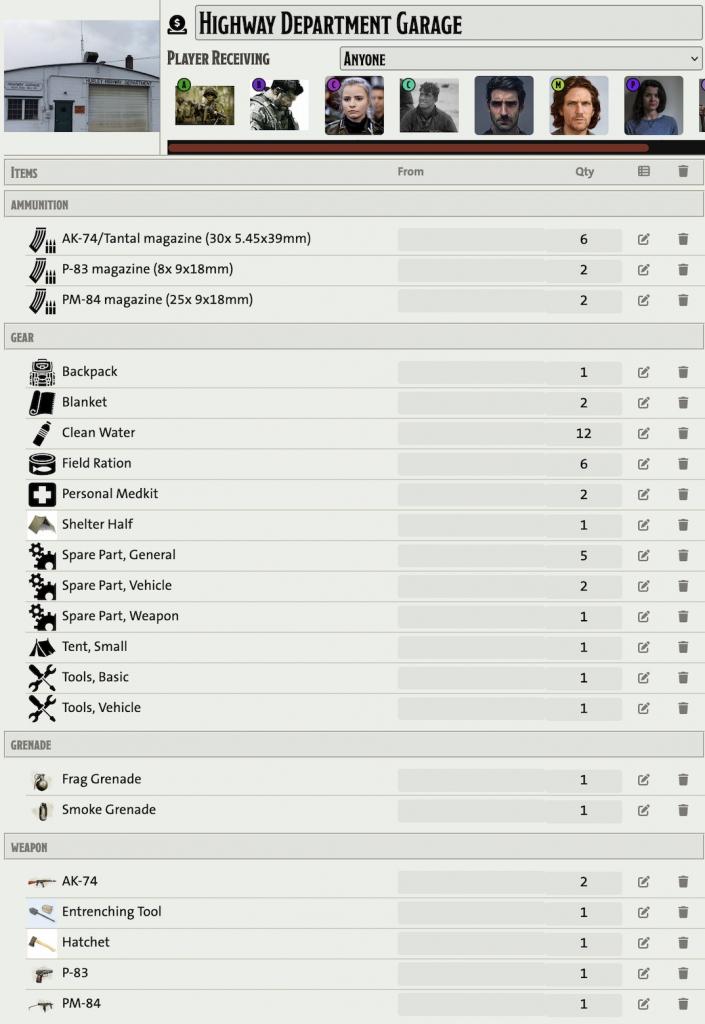
The team settles in to take care of some tasks they’ve been neglecting for a while. Arkadi and Miko heed Zenobia’s wishes and drive the black Volga out of town, ferrying it up to the highway maintenance garage. Before they leave, they assemble the makings of an emergency equipment cache and throw it in the trunk.
Fuel brewing and the harvest continue. With the medium still operational and plenty of leftover organic material coming in from the fields, this is the time to fill every vehicle’s tank and Ponikla’s reserves.
Zenobia, and Arkadi once he returns to town, tear into the BTR-70K. They’re able to condense five damaged radios into two working ones. Once that’s done, Arkadi and Minka set to work on the BTR’s KPV, while Red and Zenobia head east to drop off the working radio with Von Bahr. He still has some obvious warlordy tendencies that make the team edgy, but he’s the most combat-capable ally they’ve found so far – and he’s sitting on a strategic piece of infrastructure.
Pettimore’s burns heal with the unnerving speed the team has come to expect from their little microscopic friends.
This whole scene was a result of rolling into the topmost hex of my weather hex flower table (to be detailed in another upcoming post). That result for weather indicates some sort of hazardous weather. Because the previous day had been extremely hot, I decided to throw in a day that would have been a red flag warning in modern National Weather Service terms: hot, low humidity, and high winds, perfect for starting and spreading wildfires. I struggled a little bit on how to make a wildfire interesting and “winnable” before settling on a field fire that would start small enough to be manageable… if not for some complicating factors.
The action sequencing for this “fight” ran according to my normal initiative house rules, with the farm NPCs assisting the PCs and the fire acting in the NPC phase. Attempting to extinguish an adjacent burning hex was a slow action requiring a successful Stamina roll. This received the usual +1 bonus for each helper, and an additional +1 if the PC was foolish enough to stand in a burning hex and try to extinguish it.
Good enough so far, but how about the fire “fighting back” and spreading? Well, I decided that while the initial UXO blast that sparked the fire was “natural,” the weather and – ahem – other conditions were right to attract entities that would drive its spread. What the PCs couldn’t see (until Minka and Pettimore uttered their respective prayers) were the two hexes that I had designated as holding the initial entities:
On each NPC/fire turn, I rolled 1d10 for each active entity. For each success (6+), the fire spread one hex. For each maxed die, a new entity would join the fight – which would drive faster spread on subsequent turns.
For each hex of spread, I chose a burning hex and rolled an appropriate die to randomly determine where the fire would go. For example, this would just be a d5 (or d10 / 2) roll:
After all spread had been resolved, each burning hex rolled a normal intensity C (2d8) fire attack against each character within its flames.
So far, this would work perfectly well for fighting a normal fire, perhaps with some mechanism for randomizing the spread rather than picking the source hex with deliberate ill intent (and for pushing the spread downwind).
As far as the entities went – Minka dubbed them “fire sprites” in the team’s after-action review and the name stuck – I decided that they’d be invisible to the PCs, but anyone who spent a turn studying the fire’s spread would get a Command or Survival check to realize the fire was acting unnaturally. With success, they’d be able to perceive the fire sprites. Minka was designated as getting automatic success because of all the PCs, she’s been leaning the hardest into the local folklore. If we’re putting it in D&D terms, she’s the party’s druid to Pettimore’s paladin – but as it turned out, both players independently did things that made me say, “screw it, you can see” without a roll – as did Arkadi’s player a couple of turns later.
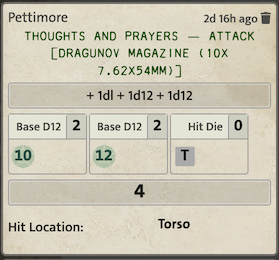
Banishing a fire sprite required total melee damage (or Thoughts and Prayers damage) of 5 points. I also was open to creative solutions, but Minka, Pettimore, and Arkadi solved the problem rather efficiently once they could actually see it.
I would like to note for the record that Loctite Superglue Gel is the only thing I’ve found that makes assembling multipart miniatures a bearable task in any way whatsoever. It’s not bad for basing figures, either.
It’s another scorching-hot day in Ponikla. There’s not a cloud in the sky, the air is paper-dry, and a stiff northwest wind is more like standing in front of an oven than any sort of source of cooling. The team is getting ready for chores that hopefully won’t involve field work (good luck with that in the middle of the wheat harvest) or standing in the forge all day.
Minka is working with the horses before it gets too hot when she hears the rhythmic squeak and rattle of a bicycle coming into town from the northeast road. It’s Blanka Laska, one of the teenagers from the north farms. She’s out of breath and looks to be suffering from incipient heatstroke. Minka drops what she’s doing and runs to meet the girl, with Red and Arkadi arriving just behind her.
Bianka is semi-functional but manages to stammer out her message as the PCs half-carry her into Red’s lab/clinic. Her family and farmhands were preparing for the day’s work when something exploded in the treeline next to the wheat field they were planning to harvest. There are multiple critical injuries.
Red and Arkadi share a grim look. “UXO.” There’s no need for either of them to say more.
There’s a quick assessment of time and distance. Most of the team’s transport has to cross the rail bridge about ten kilometers east of Ponikla, which will cost them valuable time (and fuel, though no one is thinking in those terms right now). They could take the horses and motorcycles across the smaller, less-robust bridge at Mysiakowiec… but they also have the BTR-70K, whose amphibious capability is still intact. Its main gun remains disabled and it’s still mechanically sketchy (they’ve only restored 2 points of Reliability so far), but it’ll allow them ford the Pilica and it’s built for off-road driving.
With that decision made, Red and Minka begin prepping everything they’ll need for trauma surgery. Arkadi and Leks strip the BTR of everything non-essential, just in case it sinks in the river and they have to drop back to Plan B (though the radios stay aboard for the moment, with stripped screws [and a failed Tech roll] preventing their swift removal). Pettimore and Miko also gear up to help with security in case the explosion was the precursor to some other hostile action or otherwise attracted unwanted attention.
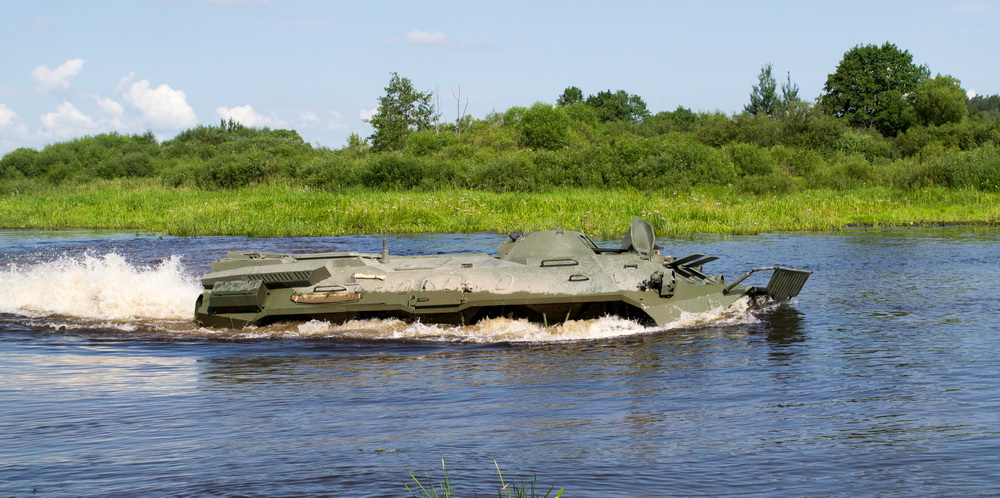
The team loads up, with the roof hatches open and Blanka in the commander’s seat to help navigate. Arkadi fires up the twin V-8s and the big machine grumbles its way down the path the shore, shouldering brambles and saplings out of its way. Everyone holds their breath and mentally rehearses their bailout procedures as Arkadi deploys the trim vane, switches on the one working bilge pump, and eases into the dark water. The hull holds, though, and the BTR surges forward as the rear pumpjet schlorps into action.
Pretty much like this, but with more tension. A lot was riding on Arkadi’s d12+d6 Driving check.
The team arrives at the farm in question in about an hour. They’re met by a collection of worried inhabitants, headed by Julianna Kaluza, the farm’s elderly matriarch. While leading Red and Minka into the main farmhouse, she explains that the blast occurred when the farmers were dropping their equipment and water in the shade of a grove next to the field. There was no indication of any sort of attack and nothing else has happened since.
Red and Minka begin patient assessments and triage. Alfred Kazula, Julianna’s husband, escaped major penetrating trauma, but he has blast injuries and appears to be dealing with multiple broken ribs. Klara Laska, Blanka’s older sister, and Olaf Kwiatkowski, a middle-aged farmhand and refugee from Wloclawek, both have critical abdominal injuries from shrapnel and aren’t likely to live out the day without intervention.
As Red and Minka scrub up, Leks partners up with one of the other elderly farmers. The two of them climb onto the roof of the farm’s machine shed to keep watch. Leks quickly learns that the old dude was a partisan in the 1940s, and the two men begin bonding over stories of killing Nazis and Russians.
Pettimore, Arkadi, and Miko grab a couple of the farmhands who can show them where the explosion occurred. They head down to investigate, cutting around an already-cleared field and through a couple of orchards. When they’re about fifty meters away from the blast scene, Miko takes point, ve-e-e-e-e-ry cautiously advancing while looking for tripwires, mine triggers, or anything else that could indicate the potential for a second explosion.
The smell of smoke and high explosives is heavy in the air. The blast appears to have been large – an artillery shell or air-dropped bomb – and subterranean. The ground is ruptured and heaved up, and several trees have been overturned or shattered at their roots.
Arkadi and Pettimore come to the realization at about the same time. It’s been three hours since the explosion, and that northwest wind has been pretty constant. They shouldn’t be smelling three-hour-old smoke, much less explosive residue.
That’s when they catch sight of the blackened trail leading into the field, and, beyond it, the flickering orange light and white haze of a grass fire.
Miko [Agility B, Mobility C, Runner specialization] takes off at a dead sprint, heading back to the farm buildings to rally all available able-bodied people. There are a few minutes of confused activity as the PCs drop packs and weapons and the farmers grab shovels, rakes, and any other tools that might come in handy. Red [best Command in the group and Logistician specialty] assembles everyone on the north side of the burning field, intending to fight the fire with the wind at the team’s back.
Dramatic re-creation because I failed to get a screen shot at any point during this scene.
[The rules for this “fight” were kind of fun, so I’ll write them up in a separate post.]
The team enjoys some initial success in knocking down the flames, and the burning area is shrinking. Then the fire flares back up, re-igniting in the areas they’ve extinguished – and, in some cases, moved into. Minka takes some minor burns. Pettimore is less fortunate, being set alight and severely burned on both arms [burn crit].
Arkadi takes a moment to study the scene and realizes that the fire is spreading against the wind – and, more often than not, toward the people who are trying to fight it.
Pettimore pushes himself up from the ground where’s extinguished himself and begins praying.
Minka casts something [a ration] into the dirt at her feet and begins praying, too.
[When I planned this scene, I had a general trigger condition set for PCs to notice certain things about the situation. Imagine my surprise and entertainment when, on the same turn, both Pettimore’s player and Minka’s player independently PM’d me:
Pettimore: Pettimore will begin to pray silently that the others survive this, and these people's harvest survives.
Minka: "Please do not burn my friends, my friends food! I will give you a small portion of harvest, thick sweet spirits and fruits... Stop hurting my friends you impressive, fiery bastard!"]
Pettimore and Minka look into the flames and see. On the south side of the fire, three vaguely-humanoid figures are dancing and capering in the flames. They appear to be made of fire themselves, with skeletal wings that are fanning an invisible wind against the direction of the actual wind.
Pettimore staggers into a run toward where he dropped his pack.. and his rifle.
Minka drops her shovel, unslings her hammer, and begins circling the fire, trying to get to its south edge.
In most fights, Minka is more dangerous with this than with her rifle. Today was no exception.
The fire continues blazing back in the team’s faces. Miko screams and charges into it, laying about wildly with his shovel and somehow avoiding serious injury; the farmer partnered with him has no interest in following. Arkadi takes a minor burn but is able to extinguish himself with his partner’s aid.
There’s a soft, unnoticed click as Pettimore drops to a knee, flicks off his rifle’s safety, and takes aim.
Miko continues darting in and out of the fire. Red tries to rally the rest of the team on the western flank, collecting the farmers that were aiding Miko and Pettimore. The team’s fighting a holding action but they’re making no headway.
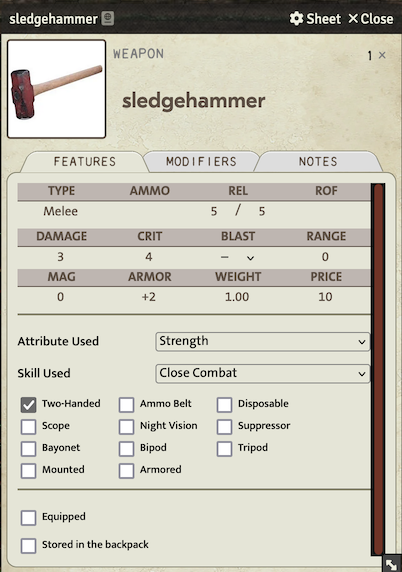
Minka screams something and swings her sledgehammer through the flames. She feels a feathery, gossamer resistance as it slashes through the pelvis (or at least the location where the pelvis should be) of one of the burning figures. The ground around it hisses like red-hot steel being quenched and the fire there goes out.
Everyone stares.
Pettimore presses the trigger.
Visible only to Minka and Pettimore, another of the burning figures flies apart and the flames where it was dancing hiss out like snuffed candles.
Arkadi has no idea why Pettimore is shooting the fire, but he trusts Pettimore implicitly and knows there’s gotta be a reason for this. He doesn’t know Minka as well, but she’s competent and seems rational, so there’s gotta be something…
Arkadi drops his rake, draws his tomahawk, and sees.
His swing cuts the legs out from under the third figure. It has time to see him in return and begin drawing itself up for a return strike before Minka crushes its head.
As the flames in front of Arkadi and Minka die, the rest of the team moves in. It’s only a few minutes’ work to knock down what remains.
First, a digression on a couple of signature weapons:
Since Pettimore’s inception in this campaign’s previous iteration, he’s carried a Dragunov SVD named Thoughts and Prayers. Shortly before entering the catacombs of Czestochowa, Pettimore met a Polish Catholic priest, Father Wojiech (yes, that Father Wojiech). In the course of exchanging information and receiving counsel, he asked the good father to bless his rifle. We’ve never specified exactly what the blessing did in game terms, but, well… here we are.
For his part, Arkadi carries a hand-forged tomahawk from a limited run commissioned by 10th Special Forces Group shortly before the war. They were originally exclusive to 10th Group, but a few spares, as well as examples formerly owned by fallen SF troops, were given to members of allied intelligence and direct action units operating alongside the unit. Arkadi is the only KGB defector to earn one. As far as we know, it has no particular special blessing on it, but it definitely had an effect in this session, and it now emanates a faint haze of smoke.
This was quite a fun session to run. Even without the paranormal aspect, I’m quite happy with how the “combat” against the fire worked. As noted above, I’ll share the mechanics behind that in a separate post.
Technically, there was some cleanup work at the end of this session, as well as discussions of what to do next, but this seemed like a good place to wrap up the narrative. The next couple of campaign posts will include this session’s post-fight details and their outcomes.
Only a couple of days of downtime, as events are about to overtake the team.
While Red, Magda, Minka, and Zenobia were away making friends, the rest of the team tested the new still and continueed with the harvest.
The day after that is 07 August, a full downtime day. Pettimore, Leks, Minka, and Zenobia take the 2.5-ton truck out to the hog farm construction site and recover the concrete premix and lumber. It’ll take another couple of trips to bring in the roofing materials, but this is a start. Minka works constructing a paddock for the stallion [the player has named the horses and set out Minka’s agenda for training each of them]. Miko heads out to meet up with Ellis for a bit of reconnaissance and possibly sabotage [to be detailed separately]. Fuel brewing continues.
On 08 August, Red, Zenobia, and Arkadi throw a bunch of parts and tools in the 2.5-ton truck and drive out to the vehicle cache, meeting some of Von Bahr’s crew who are doing similar work. They get the BTR-70K into working condition (Reliability 2/5), convert its engine to run on alcohol (it was still set up for gas when it was abandoned), and bring it back. Its radios are trashed and its mounted KPV is out of ammo at at 0/5 Reliability, but it’s a start. Minka finishes the paddock with surprising speed (perhaps faster than any reasonable person should have been able to without help…) and puts in some horse time. Miko returns from whatever he and Ellis were up to. The harvest continues.
It’s also worth noting that 08 August brings a heat wave to central Poland, with brutally high temperatures and a stiff wind that does nothing to cool people working outside (or at a forge).
The day is clear, sunny, and promising to be hot. It’s perfect harvest weather – which may be why only Magda, Zenobia, Red, and Minka are aboard the UAZ-469 when it rolls out of Ponikla early in the morning. They’re headed east, moving downriver along the Pilica’s south bank to survey and map more of the territory between their home base and the hydroelectric power plant whose location Minka recently obtained.
The team stops at Mysiakowiec, the village only a kilometer downriver from Ponikla with the bridge that’s only safe for pedestrians, horses, and motorcycles. There’s evidence of more refugee movement through the area, southbound across the bridge, with at least one group having overnighted in the ruins. Presumably, whatever is happening around Warsaw is still driving people away.
There’s no contact to be made, so the team presses on, using the unpaved service roads that roughly parallel the river. About an hour in, Magda sights a complex of half-intact, skeletal buildings – and beyond them, two vehicles. The team halts and Zenobia carefully moves in to get a better look.
The site is long abandoned. Before the war, someone was building a large hog farm. Four long, low barns have frames and partial roofs, and poured foundations show where service buildings and workers’ quarters would have gone if the war hadn’t interrupted construction. The vehicles were once medium-sized cargo trucks, 5-tonners or thereabouts, but they’ve burned so thoroughly that it’s hard to tell model or origin. Other signs of a firefight at least a year ago speaks of something having gone down here, but scant evidence has endured this long.
The construction materials scattered around the site are in better shape. There’s a large amount of corrugated sheet tin roofing material, two pallets of concrete mix, and two pallets of treated lumber. Additionally, the team turns up five glass bottles of Coca-Cola, apparently bottled in West Germany, and a single 152mm HE artillery shell.
The UAZ-469 lacks the cargo space for the building materials and no one wants to be seatmates with fifty kilos of TNT and shrapnel, so the team takes the Coke and leaves the rest for later retrieval.
Battle at the Boneyard
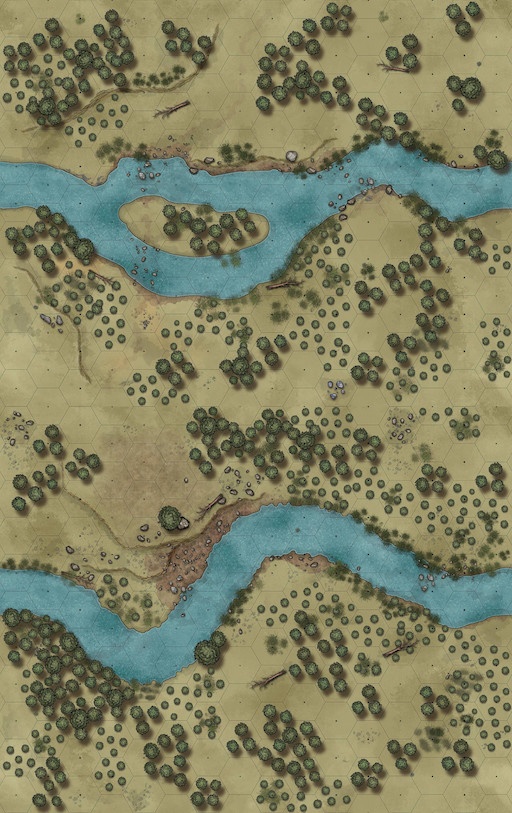
The service road gradually fades out as the terrain slopes down toward the river’s floodplain. The team is driving along a spit of land between two creeks when they hear the sound of a larger and more poorly-tuned engine from somewhere ahead. Pulling over, they park the UAZ behind a hill and move forward to investigate, Zenobia on point.
Pulpscape from Patreon comes through again. This was a combination of two of their geomorphic battlemaps.
As Zenobia reaches the hill’s crest, she sees a fair amount of metal. About sixty meters away, a scattering of trees and shrouds of tattered camouflage netting conceal four vehicles: a pair of BTRs, a BMP-1, and a T-72. A GAZ-66 light truck is parked in the open. Around it are nine men in piecemeal attire – civilian garb and Soviet and Polish fatigues – and NATO-style helmets. They’re armed with the assortment of Warsaw Pact weaponry that’s common in the area, and they’re in the process of taking up defensive positions facing east.
The threat they’re aligning towards is a slightly-larger force that’s just come into view. A pair of four-man rifle teams are maneuvering up either side of the spit of land, with a machine gun team anchoring the line in the center. Along the southern of the two creeks, another BTR is snorting its way down into the water. As it turns, Zenobia can make out its ZOMO markings.
The leader of the group nearer the PCs is snapping commands in German, which Red speaks. There’s no clue as to the group’s origin, though.
As the PCs watch, a gunfight begins. The presumed-Germans, lacking heavy weapons, quickly take the worst of it. Two of them go down and their comrades pull them behind cover. The ZOMO forces close in, supported by judiciously-placed short bursts from the BTR’s 14.5mm heavy MG.
There’s a quick debate about what to do. The team definitely doesn’t want to help the ZOMO squad, assuming they’re part of the Radom garrison that is becoming more of a concern with every new piece of intel. On the other hand, they have no idea who the Germans are.
The ZOMO’s superior numbers and fire support establish a clear advantage. Between the MG team and the BTR, the Germans are pinned down. Their leader calls to his men to get the wounded aboard their truck. A well-timed frag grenade arcs out, suppressing one of the ZOMO rifle teams and giving the Germans the opening they need to start their breakout.
On the hill, a quick vote shows two in favor of helping the Germans, one opposed, and one undecided. The PCs are as yet unnoticed, so they have options. The biggest problem is the BTR. Without Leks, they’re limited in heavy firepower – but Red, who can march for days with a much heavier burden than his build suggests [Load Carrier specialty], digs a HEAT rifle grenade out of his ruck. He’s been carrying it for a while in case such an occasion presented itself.
Of the three who are not the team’s sniper, Magda is the best shot. Red hands the rifle grenade to her and they sprint southeast, followed by Minka. Zenobia pulls her ghillie suit over her head, eases forward, and blows the head off the distant machinegunner.
There’s a flurry of gunfire as the ZOMO troops react to this new intrusion. Red takes a flesh wound and reciprocates by dropping one of the ZOMO riflemen. Zenobia kills the assistant gunner before he can recover from his shock and take over the PK. Magda takes careful aim and launches a rifle grenade for the first time since her initial military training.
The warhead sails downrange and slams into the BTR’s turret. A spray of fire and gore blasts out the far side [penetrating hit, gunner, critical]. The big KPV swings skyward and falls silent.
The PCs’ entrance turns the tide immediately. A few of the Germans take blast and frag injuries from an RPG round, but under Zenobia’s precision fire and the massed counterattack of Red, Minka, Magda, and the Germans, the ZOMO troops fall. The sole survivor is the BTR’s driver, who surrenders after failing to restart his stalled vehicle [seriously, three failed Driving checks in a row].
The Germans are reloading and eyeing the new arrivals nervously. Red takes the lead in the negotiations. The German commander introduces himself as Oberstleutnant (Lieutenant Colonel) Boris Von Bahr, formerly the field-promoted XO of the 28th Panzergrenadier Division’s armor component. Red recognizes the unit designation: the 28th PzGren was formerly the East German 8th Motor Rifle Division, one of the units that threw in with NATO when the war began.
Von Bahr’s Story
Von Bahr doesn’t attempt to throw around his rank, but it’s clear that he’s conscious of Red’s relatively junior pay grade (whatever that means these days). However, he explains that he and his troops recently arrived in the area. The 28th PzGren took part in the Operation Advent Crown offensive through Poland in 1997, making it nearly to the Soviet border before the desperate Russians unbottled the nuclear genie. Von Bahr and his troops were subsequently captured around Lodz during the NATO retreat. The Soviets shipped them east to a prison camp near Brest, where they were interned for two and a half years.
In April, the guard force on the camp was halved. A prisoner uprising was partially successful. Von Bahr gathered as many former East German prisoners as he could and organized a force which managed to break out. Stealing weapons and transport, they headed west.
As they traveled, it became clear that the camp’s guard force had been reduced to allocate soldiers to a major Soviet and Polish operation. The escapees were moving west in the wake of a massive troop movement. Realizing they were still far behind enemy lines, they temporarily set aside their goal of returning home. Instead, they found an ungoverned village with a nearby defensible industrial site and settled in, establishing themselves as local protectors (read: warlords). They’re still undecided if this is a temporary arrangement or if they intend to settle here.
The vehicles? Ah, there’s another tale. During the NATO withdrawal in the autumn of 1997, retreating forces had to abandon a large amount of equipment that wasn’t capable of keeping up. The 28th PzGren has been this way before, and Von Bahr recognized a couple of landmarks in the area. He and his men were on an initial survey to see if anything was still here and recoverable.
Boneyard Report
While this conversation is happening, Zenobia and Minka are inspecting the vehicles alongside Von Bahr’s troops. Their assessment is:
One BTR-70 is better used as a parts donor. It took a large-caliber gun hit in the engine compartment and it’s surprising that it didn’t burn where it stood.
The second BTR is actually a BTR-70K, the command vehicle variant of the basic design. Its troop compartment is holed and the radios don’t look so good, but it’s mechanically recoverable.
The BMP-1 also took a heavy hit to the troop compartment, straight through the rear doors. The fuel tanks must have been nearly empty because it didn’t explode and burn, but there’s shock damage throughout the vehicle and the troop compartment is not a place anyone will want to sit.
The T-72’s engine appears to have eaten itself. Zenobia counts at least three separate issues of poor quality control at the factory – arguably, it’s impressive that the thing made it this far. Its main gun is also a wreck, as someone set a small demolition charge on the breech before abandoning it.
Finally, the ZOMO BTR-60 is intact other than a ragged hole through the turret and a fresh coat of gunner on much of the interior.
Von Bahr listens to Zenobia’s (translated by Red) survey report, which aligns with that of his own mechanics. His troops are gathering up the ZOMO weapons and equipment, but he acknowledges – a trifle grudgingly, Red thinks – that he’d be in a lot worse place right now if not for the PCs. Since his original intent here was salvage, he offers them a choice of the BMP-1 or one of the BTR-70s, provided they can repair and fuel it. After some discussion, the team opts to claim the BTR-70K, hoping they can get some of its radios working.
[The player behind Ellis and Arkadi, who wasn’t able to make this session, has been the driving force behind a lot of the team’s intel operations. There was some discussion of taking the BMP-1 just to hear his reaction upon learning that the team passed up a command vehicle. Strategic planning prevailed over the hunger for a bigger gun, though.
At this point, the party actually has a ridiculously large motor pool: two motorcycles, a UAZ-469 with mounted PK, a technical with mounted M2HB, an OT-64, an M35 deuce and a half, a farm tractor, a small bulldozer, five horses, and now a recoverable BTR-70K. Plus the Black Volga, around which no one but Arkadi seems comfortable…]
Von Bahr’s troops bundle up their dead and load them into the GAZ-66. They’ll come back with parts and tools, but for now, they’ve done all they can here. Von Bahr invites the PCs to partake of what hospitality he can offer. They accept; his description of his base makes it pretty clear that he’s taken over the hydroelectric plant that was their eventual objective, so yes, they will take the opportunity for a tour.
Cognitohazards
The team mounts up and rolls east behind the GAZ. Eventually, the power plant comes into sight. It’s an unlovely complex of heavy industrial architecture squatting behind a high chain-link fence along the diversion channel that once fed the turbines. Von Bahr halts and gives what’s evidently a duress/all-clear sign to the sentries on duty, and the party proceeds into the compound.
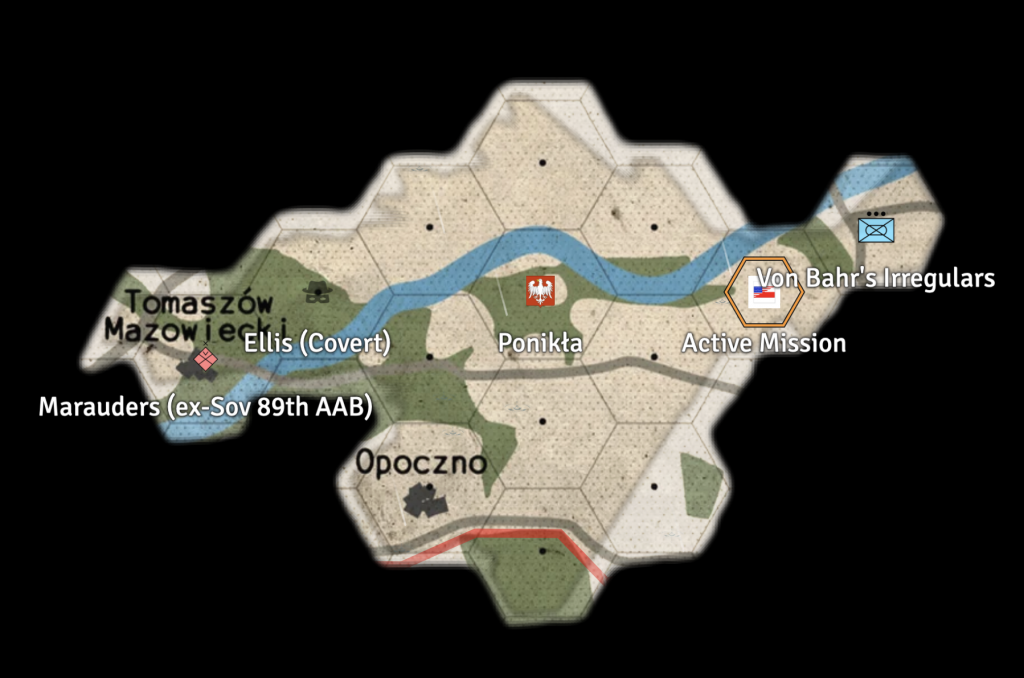
World map update, with two hexes opened up during this session.
Inside, the compound is clearly showing signs of long disuse followed by recent cleanup. The Germans are setting up for a long stay, but they’ve only been here a couple of weeks. There are the beginnings of garden plots but no crops or livestock. A second GAZ-66 is parked next to a former machine shop and there’s a sandbagged machine gun emplacement atop one of the sturdier buildings.
Von Bahr’s total force appears to be 19 troops (after subtracting the two casualties he just took), about a third of whom are female and seem to be on equal footing (allowing for residual rank) with the men. Four civilian women are also present, two of whom are visibly pregnant. When queried, Von Bahr explains that the latter are war brides. One of them is the unit’s only medical support, a former POW camp nurse with a public health background.
Magda spots a town a few kilometers to the east, sitting at the junction of two major highways. According to Von Bahr, that’s Bialobrzegi. Formerly home to a small shipyard and a large commercial garage, as well as the housing and support facilities for the power plant, it’s now home to a few hundred subsistence farmers. The place was ungoverned when his force arrived and it’s now under their protection. Red and Magda don’t quite get a “marauder protection racket” vibe, but Von Bahr’s attitude does seem to be somewhere between dismissive of civilians and outright warlord.
While Red and Magda continue to trade information with Von Bahr, Zenobia and Minka are more interested in the machinery on site. Von Bahr is dismissively fine with them inspecting the turbines and the rest of the plant, though he does insist they have an escort. His apparent XO is Oberfahnrich (Senior Warrant Officer) Thekla Adler, a snub-nosed, shaven-headed woman with the emaciated greyhound build of a distance runner who’s spent a couple of years on short rations. She’s a bit standoffish, which is a good match for Zenobia’s usual demeanor, but isn’t unwelcoming. She admits that the East Germans hadn’t really considered the possibility that the power plant might be restored to operation. To them, it’s just a defensible position close to water and a population center.
About thirty minutes of mechanical inspection seems to indicate that the turbines and other worky bits are aged (the place was built in the 1950s) and haven’t seen maintenance for a few years, but it should be possible for a good engineering crew to put them back into operation. The broader question is getting the local grid back up – if they can’t transmit the power anywhere, the plant is of little use. Zenobia asks about seeing the control room. Adler has to think about this for a moment – for some reason, that’s another thing that it never occurred to any of the East Germans to check out when they moved into the compound.
The control room [because I have an unlimited budget for special effects and set design] is a spacious room on the facility’s top level with the archetypal slanted glass wall overlooking the turbine floor. It’s dusty but appears to have been shut down in good order. No problems here.
Minka spins around in one of the swivel chairs and freezes. On the back wall, unnoticed when the trio came in, is a map of the regional power grid. She points it out to Zenobia, who starts making strangled joyous sounds. While the PCs did find a vintage map of Polish mineral resources in the museum, this is the first no-shit usable technical map they’ve encountered. Minka and Zenobia manage to avoid drawing Adler’s attention to the map just yet – they remain wary of whatever brain-fog seems to be affecting damn near everyone they meet.
Zenobia notices a door off to one side, with a small plaque next to it: Superintendent. “Can we take a look in there?” she asks. Unsurprisingly by this point, it’s another room Adler hasn’t noticed before. It’s locked… for all of fifteen seconds, before Zenobia (who is an actual locksmith by prewar trade) has her way with it.
The door swings open. Inside is a massive desk, nearly empty – only a telephone, a blotter, and a face-down framed picture. Behind the desk is an equally-massive leather chair containing the desiccated remains of a man. Judging from the forensic evidence on the wall behind him and the floor under the chair, he shot himself in the head with an old Nagant revolver.
Against the wall, flanking the desk, are two large bookshelves crammed full of technical documentation on the plant and the regional power grid, as well as a fair amount of electrical engineering textbooks.
Adler starts seizing and drops like her spine has been removed.
“Oh, gods, we killed her with books,” says Minka.
This is a worse manifestation than the team has seen before. Adler stops breathing. Minka goes to work on her and tells Zenobia to get Red now.
Zenobia dashes outside and alerts Red, Magda, and Von Bahr of the emergency. She manages to somewhat-obliquely convey to Red and Magda that Adler is having an extreme version of the apparent brain malfunction they’ve previously observed in others. Von Bahr grabs a nearby soldier and sends him to fetch the camp’s nurse, grabs two more for escorts and follows Zenobia as she drags Red and Magda along in her wake.
Zenobia gets back to the control room, realizes she needs to keep anyone from seeing the map, and manages to position a wheeled chalkboard more-or-less in front of it. She pulls the office door shut just in time to prevent an unfortunate episode.
Red realizes he has perfectly good anticonvulsants in his pharmaceutical stash back in Ponikla. He hits Adler with a shot of epinephrine instead. This seems to get her through the worst of whatever’s going on; at any rate, her breathing stabilizes, although now her heart rate is well north of 120.
Von Bahr is watching the proceedings. The two soldiers who tagged along have posted up on either side of the door, ostentatiously not fondling their slung rifles.
Red gets up from the floor and explains that yes, he has seen this before.
Von Bahr would like an explanation.
Red: “Hmm. You might want to have one of your men cover his ears so you don’t all experience the effects at once.”
Von Bahr gives him a look but orders one of his troops to put in earplugs.
Red: “Maps.”
Von Bahr and the other soldier both glaze over and lock up in the lower-grade seizure that’s more familiar to the team. As Von Bahr comes out of it, Red explains that the team has been seeing this for a while. There seems to be a general, unspecified effect that’s suppressing awareness of any form of recorded knowledge.
Von Bahr: “What you’re talking about is suppressing any attempt to salvage civilization.”
Red: “Pretty much, yeah.”
Red further unpacks the team’s observations to date, including the apparent acclimation period that seems to vary based on exposure. His working theory about Adler’s incapacitation is that she saw… something… in the office (he avoids saying “huge honkin’ bookshelves”) that generated a more direct and severe conflict with the effect than any the team has seen before.
Von Bahr asks what else they’re not telling him.
Red glances over his shoulder at Zenobia, who mouths, “map” and points behind the chalkboard.
Red asks Von Bahr to have his troops step out so their brains don’t explode, and has Minka swivel Adler’s chair around to avoid a similar fate. Then Zenobia slides the chalkboard aside.
Von Bahr looks at the map, slides out of his chair onto his knees, pulls in a nearby wastebasket without looking at it, and empties his stomach.
Once Von Bahr recovers, this is more than enough proof for him – especially once Adler confirms her own experience and, eventually, has her own look at the map. There’s some further discussion about whatever the effect is, but Red has already shared all of what the team has assembled to date.
Conversation turns to other items of mutual interest. Von Bahr’s offer of one of the derelict vehicles stands, and he’s on board with trying to get the power plant back online. Although he outranks Red by a considerable margin (even leaving aside the fact that Red is technically a Staff Corps officer, not a combat commander), he’s not so foolish as to imagine he can place Red or the other PCs under his command. He is quite interested in the regional defense coalition that the PCs seem to be assembling with the farmers to the north, the White Eagle Battalion, and possibly Opoczno, and he sees whatever’s happening in Radom as the most immediate threat facing that alliance.
The team lingers another couple of hours, but the substantial part of the negotiations is pretty much over. Red meets with the East Germans’ nurse, shepherds her through her own brain-rewiring, and briefs her on how to get the rest of Von Bahr’s followers through the process with a safety margin. With that, the team heads back to Ponikla.
A lot happened in this session. I had originally intended Von Bahr to be less cooperative and more of a frenemy, an ongoing variable in the regional calculus. I hadn’t counted on the team hitting him with the reality check. That had some effects on his mindset and strategic thinking that made him much more willing to negotiate with Red as a social peer and military near-peer.
There was a fair amount of out-of-character discussion on how to weaponize the effect. There may be an initiative to paint maps on the sides of the OT-64 and BTR-70K and drive through enemy formations to induce seizures…