Category Archives: Campaign Log – Kaserne on the Borderlands

The Fifth Mission (04 July 2000)

The PCs are still learning and mapping their surroundings. This op sees Minka, Leks, Miko, Zenobia, and Red going southeast:

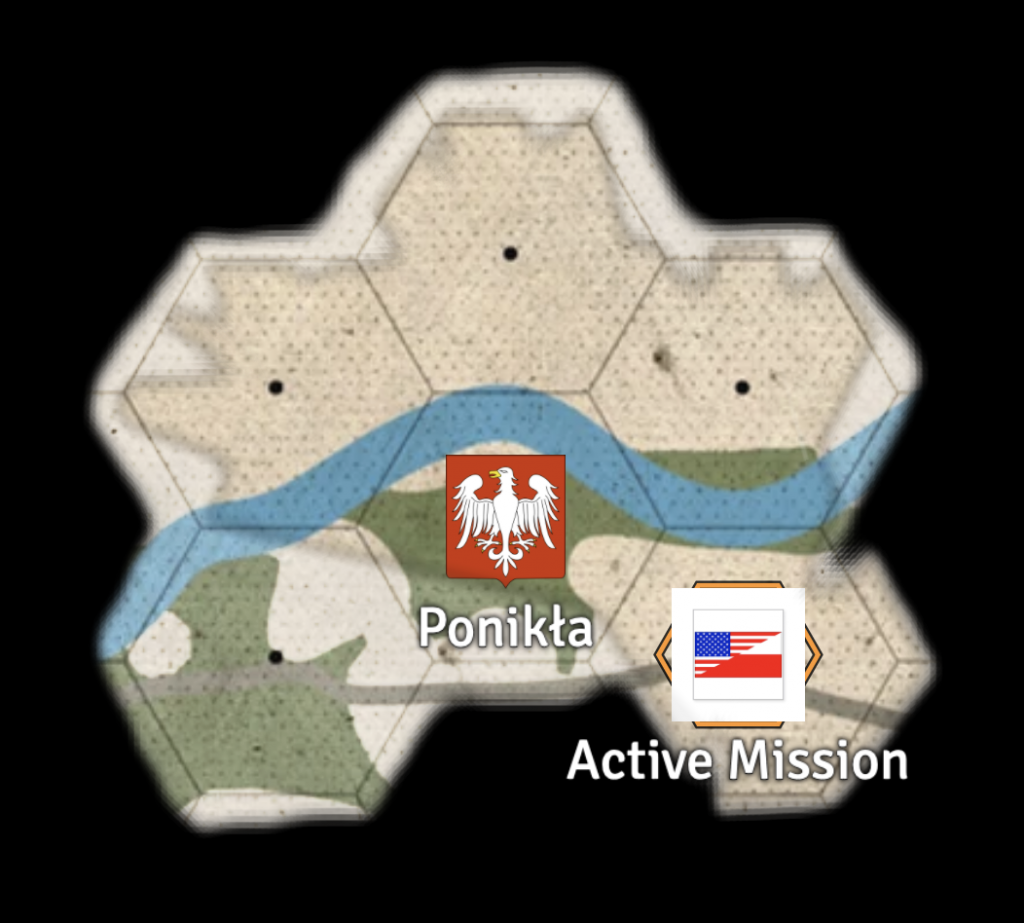
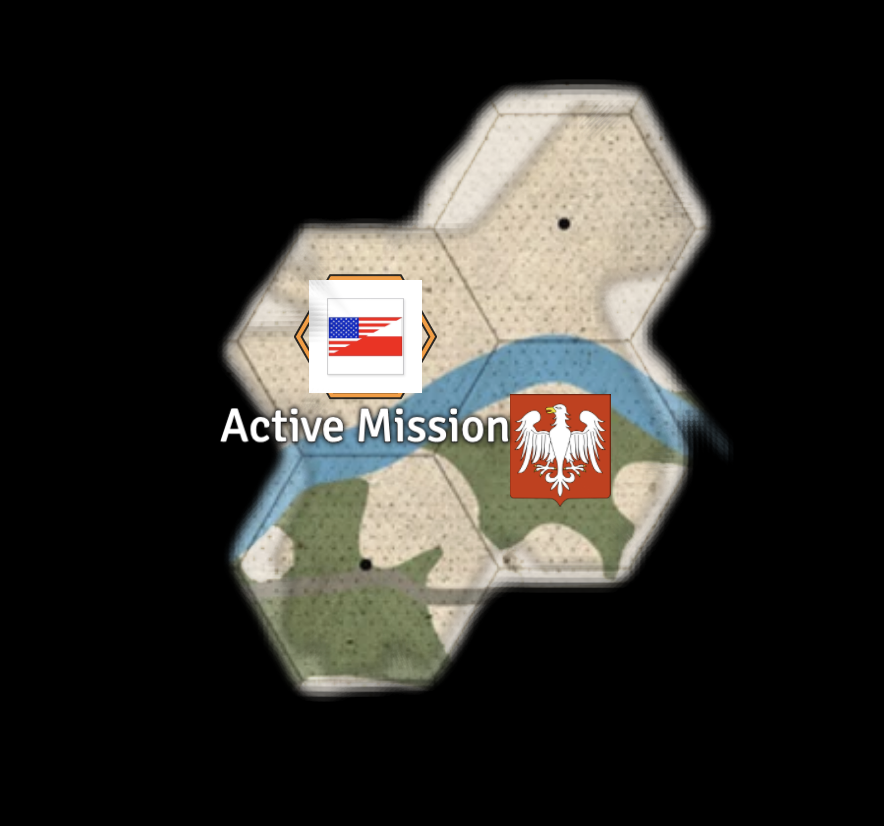
The revealed map thus far.

Since they’re staying on the same side of the Pilica and have fuel available, the team decides to take the UAZ-469 rather than walking. Their first destination is the rail bridge that they found in their previous (northeast) reconnaissance. With Zenobia along, they hope to get a bit more structural assessment [Zenobia has Intelligence A/Tech B] and maybe recover some of the explosives that they spotted.

This leg of the trip is without incident. They conceal the UAZ in a small thicket and, after carefully checking their surroundings, cross the bridge on foot. The structure seems to be in good condition, though it could use some rust scraping and a fresh coat of paint.

Once they’re on the other side, Red and Leks pull security while Zenobia leads Miko and Minka out to inspect the explosives. As best the team can tell, a 20-meter span near the bridge’s north end is rigged for demo, but whoever was setting it up was taken out in an artillery strike before they could touch it off. There’s some discussion about the wisdom of salvaging explosives that have been out in the weather for a few years, but greed wins out [and solid Tech rolls avoid catastrophe]. The haul is 38 bricks of West German plastic explosives, 9 electric blasting caps that haven’t corroded too badly, and a couple hundred meters of wire.

As the team is packing up, Red spots movement across the river, in the thicket where the team parked their UAZ. There’s a scramble to get back to the south bank, which ends in relief when a very large Belgian Malinois pushes its way out of the thicket and trots off to the south. Minka immediately takes off after it, but she loses its trail. Checking on their vehicle, the PCs find a number of muddy footprints on the fenders and door and a fresh territory marking on on one of the tires.


Continuing their mapping expedition, the team heads south, following the rail line. After about five kilometers, they encounter a junction: the double track continues south, but another single rail line joins it from the southeast. Just past this junction is an east-west paved road that runs through the center of a devastated town. There’s some discussion as to whether this was the result of a large conventional explosion or a tactical nuke, and a general realization that no one packed the Geiger counter. Zenobia quells those concerns by pointing out that the blast’s epicenter seems to be the shattered stump of a grain elevator.

The team parks the UAZ and begins exploring on foot. From the burned-out vehicles and other evidence, it looks like this town was the scene of a fight between Polish+Soviet and Polish+British forces. Their assumption is that someone hit the grain silo, either accidentally or deliberately, and ended the fight for everyone.

Miko, who’s already developing a rep for poor judgement with explosives, locates a few unexploded antitank mines by walking into the middle of the pattern. Amazingly, the team’s luck holds and they’re able to recover all four without incident. Minka wants nothing to do with this process and puts a few buildings between herself and this scene – and lucks into the ruins of a tree nursery in which a half-dozen cherry trees are still alive.

Red finds the local telephone directory, which is basically three mimeographed pages and a rusty staple. It does, however, point toward the local veterinary clinic, which is on the southwest edge of town – farthest from the blast. He rallies the rest of the team and they head that direction.

The vet clinic is on the other side of a large block of apartments. The team is almost there when they spot movement at the end of the street, about a hundred meters away. It’s the Malinois again, looking out from behind a wrecked car. It barks at them, backs up, bristles, and turns away as a pack of feral dogs emerges from the ruins!


This fight could have been uglier. The PCs are not heavily invested in Close Combat – Miko and Minka are the only ones who have any. I gave them twelve dogs, which initially were acting in groups of three (i.e., one attack roll with a +2 bonus for support, rather than three attack rolls). The PCs were justifiably concerned about rabies, so a lot of blocking occurred. Red took a bite to the arm; everyone else either took the hit on their armor or was able to counter the dogs’ successes with their blocks.

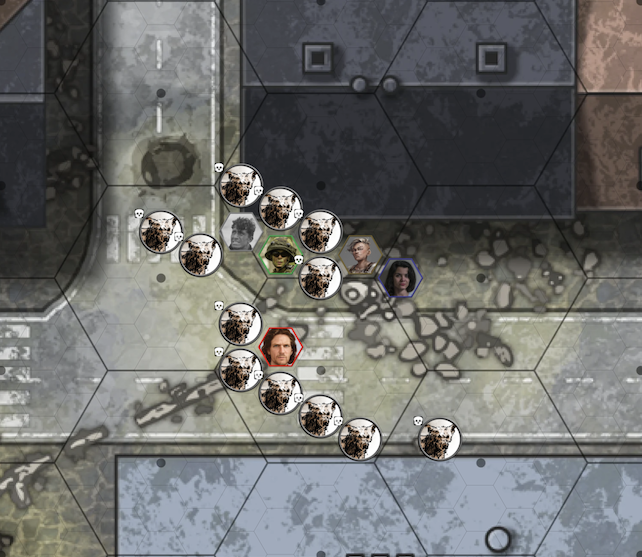
Aftermath. Leks was briefly surrounded by five dogs; I’m amazed I didn’t do more damage to the PCs.

With wild dogs only having Hit Capacity 2, a successful attack from anything but a pistol was an immediate kill. The close-quarters nature of the fight prevented a lot of shooting, though Red did take down his trio with a burst/buttstroke/burst combo over three turns. Minka and Miko both performed admirably. Leks finally got to use his pump-action shotgun, decapitating one dog with his first attack before they closed in and emptying the tube into a second one before he had to resort to melee.


Minka dresses the bite wound in Red’s forearm. Red tries not to lose his shit as he borrows Miko’s machete and splits open a dog skull. He and Minka don’t see any abnormalities… but Minka notices that all of these dogs have healed bullet or shrapnel wounds that should have been fatal.

The team checks the vet clinic. It’s mostly stripped but a few things remain. There are a few doses of blood thinner and strong stimulant, as well as an autoclave which Red immediately claims for his lab. A stuck drawer yields to Miko’s lucky crowbar, revealing a set of surgical tools, something Red needed badly.

Red and Minka really want to know more about what’s up with these dogs. They haul one into the clinic and plop it on an exam table for a necropsy. Miko, Leks, and Zenobia head outside to poke around a bit more and pull security.

Miko stays at street level, keeping an eye on the dog carcasses. He realizes he’s standing amid a lot more expended brass than can be accounted for by the team’s recent fight. Someone burned off at least a couple hundred rounds here, fairly recently – the casings still smell of expended powder. He’s seeing a lot of pockmarks in the asphalt, too, as if the gunfire was directed down…

Zenobia finds an intact fire escape and sets up on a rooftop. It’s a nice day – made nicer when she spots a light industrial building by the rail line that looks like it’s mostly intact. The front appears to have been some sort of glass-walled showroom, now burned out and collapsed over the ruins of a tank, but the warehouse-like main portion is still standing.

Back in the clinic, the dog reveals some profound weirdness. There’s a bullet entry wound on its left side and an exit wound on its right side, both healed into scar tissue. Red’s new surgical tools enable the investigators to open up the animal, revealing a channel of scar tissue straight through its body. That should have bisected both lungs and the heart… but those organs are displaced around the scar tissue. This ain’t right.

There’s not much discussion about how this might have happened. The team goes straight to “decapitate the carcasses and burn them at a crossroads.” [This is what I get when I have a bunch of veteran World of Darkness players.]


While heading back to the UAZ (no one wants to carry the autoclave across town), the team stumbles upon rather a lot of horse crap. Minka, who’s worked with horses her whole life, does the math and comes up with 50 to 60 animals moving through the area about four days ago. The team locates additional signs that about the same number of people camped here. Leks points out that the only people with that many horses are military cavalry formations. There’s no sign of them now, though, so the team loads up their loot and heads to the warehouse.

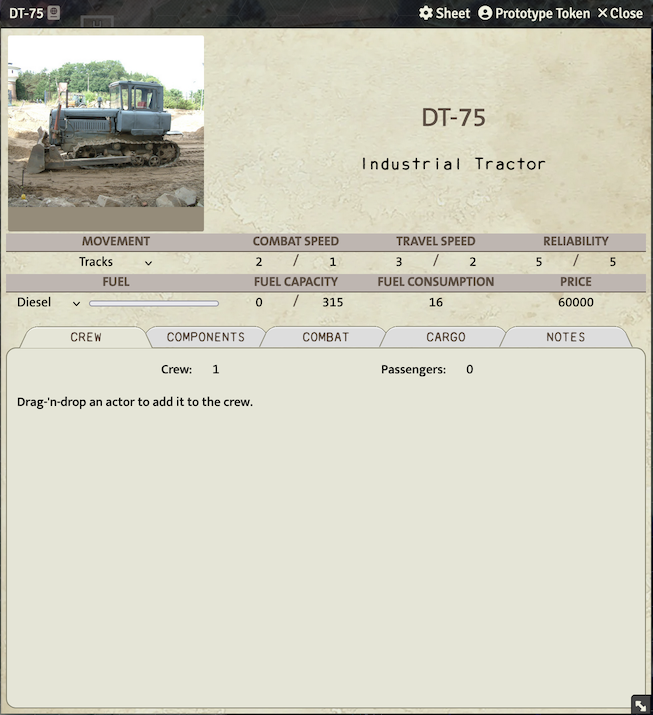
The building’s rear door yields to Zenobia’s locksmithing skill. The place appears to have been an agricultural machinery showroom and repair shop. Most of the portable tools and supplies have been looted, but a small bulldozer is parked in front of the roll-up door. Its stripped engine is dangling from a block and tackle but Zenobia and Minka are pretty sure their stash back at the garage contains all the parts they’ll need to repair it. Lurking in the warehouse’s shadows are also a hay baler, a potato harvester, two disc harrows, and a wagon, all in need of repair but potentially usable if the team can get them back to Ponikla!

I will be vaguely disappointed if they don’t go all Killdozer with this thing at some point.

Completing their survey, the team heads home. Late that evening, Ellis, Red, and Pettimore assemble around a bonfire to raise a cup of mead and toast their far-off country.

Downtime (30 June – 03 July 2000)

Following the gunfight with the ZOMO and the subsequent fruitful negotiations with the local farmers, the PCs spend a few days on maintenance and some other projects.

Red gets Pettimore back to Ponikla and settled in for healing, but once he’s sure the sniper isn’t going to bleed out, he’s focused on getting his new lab. He spends a few days with the farmers, running a pop-up clinic and packing up the lab for transport. Minka and Magda assist him.

Zenobia has some work to do on weapons damaged in the fight. She also turns her hand to fuel brewing and finally gets around to fixing up the UAZ-469 and finishing her work on the OT-64. Both vehicles are back to 5/5 Reliability (though the OT-64’s amphibious capability and left armor remain compromised).

Miko is jealous of Pettimore’s lookout post atop the hostel and begins constructing his own sniper’s hide in the trees north of Ponikla.

Ellis and Leks pack up a few days of food and head east, trying to locate the refugees they saw in Mysiakowiec and determine what those folks are up to….


I decided to treat the lab as another base facility. Once it’s set up, it’ll give a +1 bonus to Tech rolls made for agronomy- or ecology-type analysis. Finding and adding further equipment can extend that bonus to other rolls.


I also floated a new downtime activity to the group:

A hex is something like 60-70 square kilometers, so the initial mapping and exploration we’ve been doing doesn’t reveal everything in it. Scouting an explored hex takes one shift (plus travel time) and requires a Recon roll (modified by terrain, weather, and plot factors; Scout specialty provides a +1 bonus). If successful, the scouting attempt reveals one item of interest per success. Items of interest may be:

  • landmarks
  • exploitable resources
  • hazards
  • active threats
  • intel/clues
  • salvage items
  • plot

On double 1s, something unpleasant (but not lethal) befalls the scout(s).

The Fourth Mission (29 June 2000)

Continuing their local reconnaissance, the PCs cross the river at the abandoned village of Mysiakowiec and head east along the Pilica’s north bank. This time it’s Ellis, Pettimore, Magda, Minka, Leks, and Red in the field.

A couple of hours’ walking brings them to what appears to be an intact bridge supporting two rail lines which run north-south. A few artillery craters around the northern end of the bridge indicate that something went down here – and the shattered remains of a truck make it evident that someone lost big-time.

Closer examination of the bridge indicates that it’s rigged for demolition, with charges and wire still in place. There’s discussion of salvaging the demo but the PCs decide to leave that alone for now – that’s not what they’re here for. They continue north, following the rail line for a while before breaking off to go cross-country. The area is more of what they saw on their last expedition across the river: open countryside dotted with abandoned family farms.

Early in the afternoon, they come across an unpaved farm road and follow it. It intersects with a two-lane paved road running east-west. As they pause to choose a direction, they hear gunfire from the west – it sounds like a lopsided gunfight.

Moving quickly in that direction, they crest a small rise. On the north side of the road, a small force of what appears to be civilian irregulars is defending an intact gated facility of some sort. They’re under attack from a larger group of better-armed troops in Polish uniforms. Scanning through binoculars, Magda recognizes the uniforms as ZOMO – regime protection and riot control troops, very few of whom went over to NATO. Based on this information, the PCs decide to enter the fight on the side of the underdogs.

After the fight. Map by Pulpscape (Patreon).

Leks and Pettimore set up for long-range support while the other PCs close up on the ZOMO flank, using trees for concealment. A nasty close-range gunfight ensues as the ZOMO troops turn to face the new threat. Leks and Miko take wounds and Pettimore is hit hard, with an arterial bleed severely cramping his marksmanship. The PCs prevail, though, and Red gets to Pettimore before the sniper bleeds out.

In the aftermath, the PCs make wary contact with the surviving defenders, who introduce themselves as the local militia. They’re all farmers, probably none under the age of 50 (the eldest, who looks to be about 120, cheerfully brandishes a scoped Mosin-Nagant and informs Leks that he doesn’t have to be able to walk very quickly to kill communists).

The team checks the bodies of the fallen enemies. They’re all wearing insignia of the ZOMO force out of Radom, which the PCs believe to be about 30-40 kilometers east of Poninkla. They were well-equipped, with wz.88 Tantals (including one mounting an underslung grenade launcher), a PK MG, and a SVD sniper rifle.

Ellis and Magda, who’ve gone forward to open negotiations, quickly realize there’s something off about these dudes. They’re not using the facility they were defending – they’re keeping everyone out of it, even at the cost of their own lives. When asked, they state that it was some sort of government biological research facility. The scientists left a few years ago but they’re afraid there’s still a crop blight or other genetically-engineered hazards locked up in the labs. They burned the fields outside the fenceline to keep any genemod evil from spreading, but they’re afraid to enter the buildings. A couple of them suggest that the place’s agricultural research might have been a cover for bioweapons development.

Red is treating their wounded while this conversation is happening, and that’s enough to give him some cred with these guys. He stretches his medical credentials a bit and suggests that he might be able to give them an accurate and safe assessment of what’s inside the fence. The oldsters confer and tentatively agree, on the condition that the PCs not bring anything out of the compound.

Red, Magda, and Ellis enter the facility to investigate while the others stay outside. Their first stop is the office, which was stripped of scientific records but not administrative records. They’re quickly able to deduce that the research here was legit agronomy. A large quantity of basic office supplies is here, along with a copier that looks like it might still work.

Moving on, they locate the on-site commissary/break area. Some canned food is still on the shelves and the small catering kitchen is well-equipped. The break room contains a number of agronomy- and agriculture-focused science journals, which Red mentally marks for later acquisition.

Finally, they peek into the lab and grow-house. Most of the specialized equipment is gone but there are some basic tools and a lot of lab glassware and similar supplies – the sort of thing you wouldn’t bother to take with you if you still believed the war was going to be over soon. The building is fitted with a 20-kilowatt diesel generator, which looks like it’s been sitting there since it ran dry on fuel.

From a few remaining lab notes and evidence in the grow-house, the team pieces together that the scientists here were working on drought- and pest-resistant corn. Nothing suggests bioweapons research or any contamination hazard. The PCs exit the facility and report their findings to the locals, who reluctantly concede that they may need to re-think their stance on the lab.


That’s where we wrapped up the session, but we did have some follow-on discussion and worldbuilding on our Discord channel:


The farmers all come from seven large family farms in the area. Not all of them are inhabited by their prewar owners; some families abandoned their original properties to move closer for mutual support. The total population across those is about 50, roughly the same as in Ponikla, but more spread out (and with a higher concentration of actual farming knowledge – the seven patriarchs have several centuries’ collective experience). They’re about 2/3 original families, 1/3 urban refugees who’ve proven themselves willing to learn and take orders from country folk. As with Ponikla, there’s a distinct lack of able-bodied young men. They are agriculturally self-sufficient and probably running a slight surplus, though they’re cagey about specifics.

The PCs hand off most of the captured ZOMO gear and weapons to them, though Leks does reluctantly hang onto a PK and its belted ammo (he foresees the day when he’ll run out of 7.62mm NATO for his MG3). Red then opens negotiations for the contents of the lab. After some deliberation, the farmers decide that they will try to work up the courage to start using the complex as a greenhouse during the winter months. They think they can handle converting the generator to alcohol fuel and building a still to keep it supplied. They have no use for the lab equipment and are willing to offer it to Red in exchange for his services already rendered and a handshake agreement for a monthly doctor visit and on-call services for extreme trauma cases.

During their stay with the locals, the PCs notice that everyone in the farm community has similar cognitive issues to those they observed in Fryderyka’s crew. They do not have good recall of prewar events. They aren’t sure when they last traveled beyond their immediate area and aren’t aware of events outside that area. There are no reading materials in their homes – they don’t seem to notice the scientific journals from the lab if no one draws their attention to them. Basically, their whole awareness is confined to their farms and the immediate foraging/hunting area, with the exception of their dogged insistence on protecting the lab (which fades over the three days Red spends working with them on medical aid and packing the lab equipment for transport).

Moreover, they don’t notice or question any of these mental lapses unless someone points it out to them.

Red finds this damned peculiar and starts discreetly doing detailed interviews of the other PCs and some of the residents of Ponikla. He determines that that everyone on the list was having some similar symptoms until about a month ago. The PCs’ arrival at the village seems to coincide with the memory issues abating – for both the PCs and the Ponikla NPCs.


This session felt a little flat because I wasn’t really prepared for roleplaying in the post-gunfight phase. It’s progress, though; contact with other nearby friendly residents; and acquisition of some useful resources for rebuilding/recovery.

The Third Mission (26 June 2000)

With the intel Ellis unearthed about a new warlord rising in Warsaw, the team needs to know more about the landscape to their north. Red, Ellis, Leks, Magda, Minka, and Miko cross the river again and turn southwest, following the Pilica’s north bank.

The travel map with my craptacular virtual walls limiting visibility because I can’t make Forge’s fog of war and line of sight do quite what I want. The Polish heraldic eagle marks Ponikla’s location.

The terrain in this area [hex] slopes gently upward from the river. It’s more undeveloped floodplain and abandoned farms. Several of the latter have the long, low buildings of hog confinement. As the team moves through the countryside, there’s plentiful sign that those buildings’ former inhabitants have escaped and gone feral. On the down side, there’s the potential for an attack. On the up side, there’s the potential for free bacon.

Derelict Convoy

The team finds an unpaved access road that parallels the river about 100 to 150 meters from the water’s edge. There’s no sign it’s in use. They decide to follow it cautiously. About a kilometer on, Miko sights a dozen or so vehicles strung out along that road. They’re rusty, overgrown, obviously damaged or destroyed. The team moves in cautiously, spotting and avoiding some unexploded cluster munitions.

The vehicles appear to have been a West German panzergrenadier company task force before an air strike caught it. There’s a Leopard II, a few Marders, a couple of trucks, and an M577 command post vehicle. Most of the vehicles are total losses but one of the trucks, one of the Marders, and the M577 may still have some salvageable contents or equipment.

The team tosses the vehicles. They find a little bit of salvageable personal kit, a few small arms (HK23, G3, P7M8), and some ammo (including a partial belt of 20mm AP for the Marder’s autocannon). The real prize, though, is the M577’s APU, which is salvageable.

Ellis tosses the M577’s crew compartment. There’s a cylindrical case for rolled maps. He unscrews the end cap and all that comes out is ashes. He does, however, find a lockbox bolted to the radio rack. He works that loose and extracts the 80-megabyte hard drive from the one Toughbook that wasn’t completely destroyed.

Some of the salvage, like the 20mm ammo and a couple of spare track links, is too heavy for the team to carry out on foot. They cache it about a hundred meters away from the vehicles and move on.

Partisans and Patients

Moving away from the river a bit, Magda sights a large-ish building situated next to a two-lane paved road. It looks like some sort of garage or workshop facility. It’s intact, with a chain-link fence around it. A couple of piles of debris or trash are strewn around the grounds, and a small forklift that looks like someone used it for target practice is abandoned outside one of the roll-up doors. Someone may be home, though – two donkeys are grazing inside the fence.

The team’s stealthy members move in for a closer look. Magda catches sight of someone moving behind the grimy windows. She can only see the person in silhouette but they may be semi-regularly checking for visitors.

Ellis catches sight of a blood trail going into the compound. His best guess is that about a half-dozen people arrived with those donkeys, and more than one of them was wounded.

The team pulls back and confers. This might be a chance to make contact with other locals who can provide information about the area. Ellis approaches with the others covering him. An initial parley doesn’t get him shot, and when he reveals that he has a doctor, the team is invited in.

Inside, the team meets a half-dozen Polish militia troops who’ve clearly come out on the wrong side of a fight. Their leader, Fryderyka Jankowski, explains that they’re from Tomaszów Mazowiecki, a city on the Pilica about 20 kilometers to the southeast. They’re some of the last survivors of the local militia, which was massacre about a month ago when a marauder band took over the city. They and a small number of other survivors have been hiding in safehouses outside Tomaszów and harassing the marauders until this morning, when they had a very bad day. They fled to this highway department maintenance station, which they’d previously identified as a safehouse, carrying their wounded.

Red and Minka have four patients. The least-injured one has a dislocated shoulder; Minka puts traction on the joint while admiring the woman’s tattoos and forearms. Red triages the others, all of whom have abdominal gunshot wounds [the random table was unkind and not very random]. He doesn’t have surgical tools – really, he doesn’t have much – but the alternative is letting them bleed out, so he and Minka and Leks roll up their sleeves and go to work.

The medical team works well into the night. They manage to get all three patients out of immediate danger, though one will never have great kidney function again and another may still succumb to sepsis from his intestinal wound. [ Some of these medical rolls and recovery times are a bit implausible. I get the need for playability, but no one should come back from a ruptured kidney in a week. OTOH, I don’t know that I want to house-rule longer recovery times, given the speed of the average campaign…]

While they’re working, Ellis and Miko check out the rest of the facility. There’s a locker room in which Miko finds a German-language edition of Battleship and a Hungarian porno magazine. In the main garage area, there’s a derelict tractor and dump truck, both long since stripped for parts; a small steamroller; a mowing attachment for the tractor; a trailer-mounted industrial air compressor with a jackhammer; a smallish drilling rig; and a hydraulic log splitter.

After surgery is done, Minka talks to Natalka, the woman with the dislocated shoulder. Natalka used to work at a factory in Tomaszów Mazowiecki that manufactured welding equipment. Minka perks right up and starts picking her brain. [I don’t know if it was there in the 1990s, but IRL, the city really does have a welding equipment factory, so this isn’t just the GM giving the players a too-convenient lead on what they just discovered they need…]

Tomaszów Mazowiecki SITREP

Led by Ellis, the team interrogates their new acquaintances. Before the war, Tomaszów Mazowiecki had about 50,000 residents. Now it has about 2,200. About half of those live in an arc of farm collectives south and west of the city. The rest reside in the city’s southern half, trying to salvage and rebuild what they can.

The city’s prewar economic cornerstone was textiles: mainly wool, but there were some attempts to diversity into synthetic silk. Several major rug and carpet factories were located there. Other local industries included the aforementioned welding equipment factory and the remnants of the region’s iron mining, which had been in decline since the ’70s. One major road bridge over the Pilica is still up and capable of taking heavy vehicle traffic.

In October 1997, NATO hit the Polish Air Force airfield northeast of the city with a tactical nuke. The city itself sustained only minor blast damage but much of its north side burned in fires ignited by the thermal pulse. The majority of surviving residents fled and never returned. Everyone avoids the north side and the airbase’s ruins out of fear of residual radiation. [The PCs with military or scientific training are fairly sure the risk is minimal.]

In mid-May, the city was hit by a marauder band formerly of the Soviet 89th Air Assault Brigade. They did recon in early spring, sending scouts into town posing as guards for merchant caravans. When they struck, they’d clearly identified key targets. In a night raid, hit the barracks for the militia’s full-time cadre and went after the homes of many other key militia members and local leaders. About twenty militia members escaped the attack and went guerrilla.

The marauders number between 40 and 50. They had no vehicles when they arrived but Fryderyka believes they’re trying to get some into operation. They do have about 20 horses, half draft or pack animals and half cavalry mounts.

The marauders’ main base is a warehouse complex by the riverfront. They’ve taken over a couple of houses and a restaurant overlooking the bridge and the western and southern approaches, which they use as watchposts when they feel like doing the work. They’re controlling the population through a combination of random violence, protection rackets, and selective hostage management.

Off the Map

One other thing of note happens during the interrogation-disguised-as-conversation. Ellis asks Fryderyka if she can sketch a rough map of Tomaszów Mazowiecki. Fryderyka, Fabian (the other uninjured Pole), and Natalka all… lock up. It’s as if all three of them are having synchronous petit mal seizures. Red does a quick assessment: all three have elevated respiratory and heart rates and sharply contracted pupils, and he’d bet that blood pressure is up too. They come out of it after a couple of minutes with mild disorientation, headaches, and no memory of the question. When Ellis repeats himself, Fryderyka has a bit of trouble parsing the question – she clearly has to concentrate on the very concept of “map.” She does eventually produce a workable sketch of the city’s layout, though.

The PCs confer out of earshot of the Poles. Ellis observes that he saw some similar cognitive difficulties with the East German prisoners. He’s also concerned about the fact that it’s been a long time since any of the PCs saw a map themselves – or, for that matter, a book. Ponikla only has five known books: two Bibles (one of them Pettimore’s), a Polish language primer, and two novels.

[Later edit: Six books. Red’s personal effects include a copy of A Clash of Kings which he picked up at an airport newsstand on his way to deployment.]


This was a fun session to run, not least because it didn’t have a combat scene. I don’t want this game to turn into unremitting combat rounds, so some exploration, looting, and roleplaying was a comfortable mix. I also got to do a little more worldbuilding and orient the players on a potential regional threat. This being a West Marches game, there’s no requirement for them to go deal with the marauders… but it’s a potential quest hub and resource pool if they want to pick that fight.

The bit with the map issue seems to have creeped out the PCs. Heh heh.

Downtime (24-25 June 2000)

After the gunfight is over, Ellis finds a quiet place to interrogate the East German prisoners.

He learns that the band was all East German deserters. All were former conscripts; several had done prison time. They’d been operating in the area around Warsaw (north of Ponikla) until about a month ago, but a new warlord up there has been going join-or-die on local communities and bandits alike. They didn’t want to be part of something that organized again (let alone a minor part of it), so they headed south.

They did not seem to have a long-term plan. In fact, Ellis observes something that looks almost like a conditioned aversion response to questions about the future or detailed history. They literally seem incapable of recalling specific details of the war or the pre-war times, and similarly incapable of planning more than two steps or two weeks ahead. This is consistent across all four of them, even though he’s kept them separated and questioned them individually.

They admit to having shaken down the refugees but not taking anything from them – simply because they had nothing the Ossis considered worth stealing. They do not seem penitent, openly see the native Polish population as an exploitable resource, and will likely attempt to escape if they see an opening. Ellis assesses them as semi-feral.

After he shares his findings with Leks, Leks quietly agrees to handle disposal. The men are too dangerous to release and there aren’t resources for holding them indefinitely.


Magda enlists the help of Ewalina and Maciej the Brewer [both player-contributed Ponikla NPCs; Ewalina is a former high school chemistry teacher, Maciej is the village’s lead mead-maker] to bash together a small still from the community’s supply of spare parts. A few days’ work yields a working still. They start the first batch of methanol brewing.

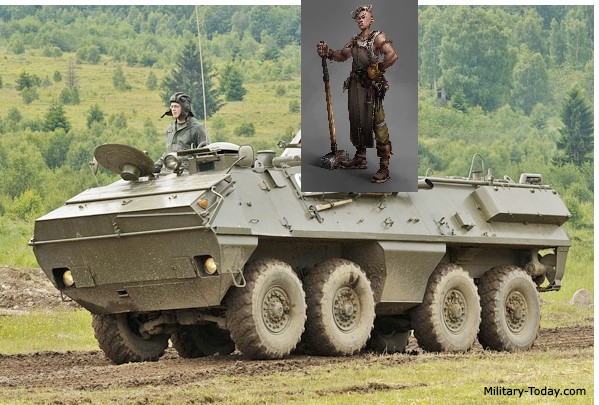
Zenobia and Minka go to work on the OT-64, which was in lousy mechanical shape when the team acquired it. They manage to patch up the damage Leks did to its hydraulics and transmission. The breached armor is another matter – they’ll need welding gear to provide more than a temporary fix or to restore the lost points of armor. Without that, the vehicle is only amphibious for a matter of seconds.


The OT-64 is now at Reliability 4/5. They seem to have forgotten about the UAZ-469, which is still sitting at Reliability 2/5.

The Second Mission (23 June 2000)

After their gunfight with the Soviet (ex-Soviet?) squad, the PCs return to Ponikla and come back with the village’s oxen to haul the UAZ-469 back to town (it had apparently been left running until it ran out of fuel). With a functional vehicle now in their possession, building a still to brew alcohol fuel is added to their to-do list. But reconnaissance of the immediate area is still the priority.

22 June is a maintenance and recovery day after the gunfight. Leks had sustained minor injuries, a few people were carrying a significant stress load, and weapon maintenance had added to Zenobia’s workload.

Kaja, Miroslav, and Marika settle into an untenanted house a few hundred meters west of the village core, where they can graze their small flock. Red examines Kaja (the newly-recruited NPC), who is about four months pregnant; his diagnostic capabilities are limited but she and the child appear healthy. Kaja and Miroslav learn that Ponikla has a priest, Father Maciej Frankowski, and express interest in being formally (if not “legally,” given the general absence of law these days) married. Maciej the Priest (as differentiated from Maciej the Brewer, also a local resident) is delighted to have something to do in this remote village that seems to be backsliding into Slavic paganism…

Late in the night, the village is awakened by a loud howling or rushing sound coming from the north, toward the river. The trees in the area aren’t moving and the sky is mostly clear – it seems to not be meteorological in nature. Zenobia theorizes that it might be mechanical in origin – maybe some sort of turbine? But no one’s seen a working aircraft in a few years. Miroslav shows up and confirms that it’s the same noise he and Kaja heard a couple of nights ago. There’s some additional speculation, but without anything concrete, everyone goes back to bed.

Meeting at Mysiakowiec

In the morning, the full team (all eight PCs) sets out for reconnaissance north, across the Pilica. To cross the river, they’ll need to head a few kilometers east to Mysiakowiec, an abandoned village [still in the PCs’ home hex] that has a heavily-damaged two-lane bridge. That bridge will support foot traffic, and a skilled horseman could get a horse across, but vehicle traffic is right out.

(In the last two years, Mysiakowiec has briefly been home to two marauder bands and a Soviet infantry detachment, all of whom apparently moved in with the intent of setting up a checkpoint or tollbooth on the bridge. As far as the Ponikla villagers know, the marauders gave up because there wasn’t enough traffic to exploit, and the Soviets got reassigned for much the same reason. All three groups departed in haste.)

In game, the Pilica is much larger than it is in real life. It’s about 400 to 500 meters wide in this area and deep enough to support barge traffic as far upriver as Tomaszów Mazowiecki. I wanted its navigational significance to match the river as it appears on the 4e boxed set’s travel map, and I wanted to accommodate later riverine shenanigans if the PCs decide to go in that direction…

The PCs arrive at the outskirts of Mysiakowiec and set up to recon the area. They find tracks suggesting that someone recently brought a couple of motorcycles across the bridge, parked them, and reconned the village on foot before returning back across the bridge.

While the PCs are doing their own assessment of the area, they notice a small group of maybe a dozen people approaching the bridge’s northern end and settling down to rest. They try to get an accurate count but it’s hard – either 13 or 14 people. There’s one guy in the back of the group who’s hard to see (admittedly, it’s 400+ meters, but they have binoculars and Pettimore has good glass on his rifle). Pettimore and Ellis are fairly sure the group numbers 14, but when they wearily get up and begin to cross the bridge, only 13 are present. This greatly disconcerts Pettimore… there’s something just on the tip of his memory about a similar experience in Krakow.

The PCs watch from hiding as a baker’s dozen of refugees settles into shelter in an abandoned building in Mysiakowiec. Doc, looking through borrowed binoculars and making the mistake of getting downwind of them, is fairly certain that dysentery is tearing through that group. The PCs decide not to confront them, though Pettimore does take a deer with his bow and stealthily leave it where they can find it later.

Truck Stop

The team crosses the bridge and moves out into the slowly-rising hills north of the Pilica, following the motorcycle tracks. The terrain here is mixed small farms and undeveloped plains. Some of the farms appear habitable if anyone wanted to set up shop with no neighbors. The skeletal, charred remains of a crashed C-130 are draped across one of the hills.

Moving cross-country and along empty farm roads, the team comes across a tractor-trailer rig in a ditch. They move in for a closer look and find the driver still strapped into his seat, where he died when a large number of bullets hit him and his truck’s engine. The vehicle’s tires are flat and its fuel tank has been siphoned, but Zenobia thinks she could get it running again with the right parts.

Miko gets the rear doors open and climbs in. He finds a number of tumbled crates full of what appear, to him, to be rocks in an excess of protective packing material. Minka comes in for a second opinion and is astonished and delighted to find a… Stegosaurus skeleton?

The PCs toss the cab. They find a roll of toilet paper in a plastic bag, some tools, a couple of cans of spray paint… and a bill of lading and a set of driving directions. This truck was one of six that were dispatched from a natural history museum in Warsaw shortly before the nuclear exchanges started in late summer ’97. They were supposed to deliver the most valuable items from the museum’s collection to a secure facility about 20 kilometers southwest of the PCs’ current location.

This scene raises as many questions as it answers, and the team marks this for later follow-up. But there’s still more recon to do.

Ossi Encounter

The team continues exploring the area, still following the motorcycles’ trail. They’re coming up on a paved road when Magda, on point, spots something angular lurking in the trees within the saddle of a pair of hills. The team’s scouts creep closer and identify it as an OT-64 – a Polish/Czechoslovakian armored personnel carrier. They also spot two motorcycles tucked back in the trees, several tents, and about six to eight armed men in piecemeal East German camo. They’ve found a marauder band – and one that’s likely heading in Ponikla’s direction, if the motorcyclists were scouting a route.

Guessing that the East Germans are going to send their scouts back across the river in advance of a crossing, the PCs backtrack to Mysiakowiec and set an ambush for the bikers. They’re hoping to whittle down the enemy numbers and score a couple of free motorcycles.

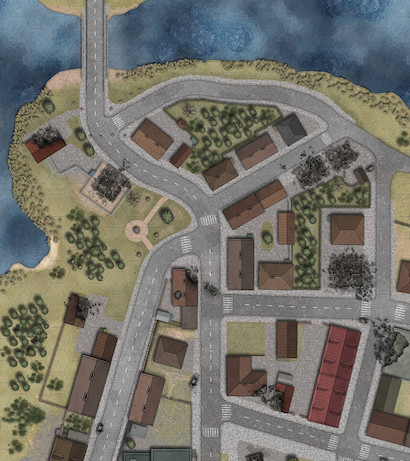
The battlemap for this encounter – a cropped quadrant of one from Pulpscape on Patreon‘s fine works.

The initial ambush goes well. The PCs set up for a crossfire and Miko kicks off the ambush by taunting the bikers into chasing him on foot once they’ve crossed the bridge and dismounted. The scouts get dropped immediately. Miko and Minka go forward to retrieve the bikes – at which point they realize that the OT-64 is amphibious and the rest of the marauders are crossing the river.

I’m not sure what my players thought the marauders were planning to do with the OT-64 after sending their scouts across again. Did they assume it was going to be abandoned on the north bank? I did give them several Tech checks to recall it was amphibious and not a single player succeeded, so our Discord channel was a verbal “surprised Pikachu face meme” when this happened.

The PCs started with no anti-armor capability and the previous session’s fight had ended with the escape of three enemies, including one who had a few rifle grenades. So Miko finding an M72 LAW strapped to one of the motorcycles is a well-timed twist of fortune [or GM benevolence]. He sprints to get it to Leks [the only PC with Heavy Weapons skill] while the rest of the team tries to re-orient toward the incoming threat.

The OT-64 lands and disgorges a half-dozen angry East German deserters, who fan out into the wooded area just south of the riverbank. Minka and Zenobia take them under fire immediately. Miko executes a Leroy Jenkins charge with a frag grenade and suppresses three of the dismounts before finding himself the unhappy recipient of four wounds from the ones he didn’t suppress. He pulls back to the rest of the team and preps another grenade.

Several turns of urban fighting ensue, with a lot of enemy hits being stopped by the combination of cover and body armor. [Seriously, I could not roll a head or arm hit for love or money.] The OT-64 circles the block to try to flank the PCs. Leks realizes its left side was holed and poorly patched [Armor 2 there, as opposed to Armor 4 on the other facings] and starts dumping a belt of 7.62x51mm from his MG3 through the replacement plate. Minka engages in a pop-up duel with a sniper with an SSG-82, which ends when Miko runs across the street in front of the OT-64 while carrying a live grenade, lobs the grenade at the sniper, narrowly misses being shot in return, and decides that his best course of action is to tackle and grapple the guy and beat him unconscious with the landscaping. [I can’t even. Everyone expected Miko’s player to be rolling up a new character. This all happened out of the other PCs’ LOS, too, so all they know is that Miko ran off into the park and came back bruised and carrying a rifle he didn’t have before…]

The PCs put the last two dismounts out of action when they attempt to cross the street and flank their position. Minka and Red gun one down; the other makes the mistake of charging Leks in close combat and learns about his d12 Strength.

The OT-64 is maneuvering to keep its weak side out of Leks’ fire, but Leks and Zenobia get a series of lucky hits and manage to disable the feeds for both its KPV and its coaxial PK. With no guns, the crew tries to run over Leks and Red, but both men dive out of the way. Minka, seeing this, charges the vehicle and somehow [3 successes on a Mobility check] mounts it while it’s backing away. She begins pounding on its turret with her sledgehammer. Red sees this, joins her, and stuffs the barrel of his M4 into the commander’s hatch. This is the point at which surrender is back on the menu.

Giddyup, Comrade.

This mission actually spanned two sessions, with the break point occurring at the start of the PCs’ ambush. Ellis, Pettimore, and Magda’s players weren’t able to join for the second session. I ruled that Ellis was off-screen shadowing the refugees (who ran as soon as the gunfire started), while Pettimore and Magda were pulling local defense back at Ponikla in case there were more undetected marauders (there weren’t, but it was a logical in-game excuse.)

I really expected Leks to light up the OT-64 with the LAW, but he never got close enough to feel confident taking a shot with it – it has a crappy Range 3 and the terrain wasn’t in his favor. He got lucky early in the fight with an ammunition hit on the KPV’s feed, so the crew never engaged the PCs with the big gun.

Amazingly, despite having five PCs in a fight I’d designed for eight, only one PC came away with wounds. They took four prisoners (the APC crew and the sniper), who Ellis and Leks interrogated between sessions. The greater take was the captured material: the OT-64 (which is no longer amphibious because Leks turned its left side into a colander), the motorcycles, and a bunch of small arms and personal gear. This gives the team some more options for mobility as soon as they can start brewing fuel.

The First Mission (21 June 2000)

The PCs have been in Ponikla about a month. They’ve recovered from the wounds they were carrying when they arrived, they’ve tended to their gear, and they’ve decided that this is, at least for the foreseeable future, home.

As this is a West Marches game, the world map is unexplored outside their home hex. They know they’re on the south bank of the Pilica, but little else [there are, in fact, reasons they can’t just look at a topographical or highway map and go from there]. So the first order of business is reconnaissance.

They launch their first recon mission the morning after the village’s summer solstice celebrations. Magda, Ellis, Red, Leks, and Minka set out on foot to explore to the southeast. The terrain here is gentle, mostly forested with occasional cleared patches where small family farms were hacked out of the woods. They’re abandoned now, mostly in ruins.

Late in the morning, they come upon something different: new ruins. It’s another small cottage, this one with a now-empty sheep pen next to its sprawling vegetable garden. The fire that claimed it must have been recent – the smell of smoke still hangs in the air. The PCs recover a few items (hand tools, a spinning wheel, some spun and hand-dyed yarn) from the ruins. Leks finds tracks where three people and about a dozen sheep headed south. Figuring those folks can’t have gotten too far, the team follows them.

The tracks lead them through an otherwise-trackless forest to a ruined village. This place appears to have been the scene of some heavy fighting a couple of years ago, with most of its buildings burned or toppled. But at the western side of this forest clearing is a light industrial structure, apparently intact, with a small flock of sheep grazing amidst a plum orchard.

Meeting the Neighbors

The PCs approach cautiously, with Magda and Ellis on point and trying to appear non-threatening. They’re met by a very cautious one-armed man in his twenties who’s carrying a submachine gun. He’s wearing local civilian attire but his Polish, Ellis notes, has a distinct Russian accent. He’s being backed up by a woman about his age with a sawed-off double-barreled shotgun. They’re initially suspicious but quickly warm to the power of Ellis’ persuasive tongue.

The squatters are Miroslav and Kaja (and Kaja’s mother, Marika). They’re rather nonspecific about their prewar history – especially Miroslav – but they’ve been staying out of the way of, well, everyone in the family cottage. That is, until Marika’s cat triggered a cooking accident that burned the place down. They knew the village was here, so they salvaged their remaining belongings and brought the flock here for shelter. Miroslav wants to rebuild eventually, but this is “home” for now.

(Miroslav and Kaja also mention that they heard what sounded like a windstorm the previous night. There was a great howling noise and rush of air north of their location. This croggles the PCs a bit because the weather has been clear to partly cloudy – certainly no storms in Ponikla, less than 10km away…)

The PCs confer. The trio apparently has some skill if they’re surviving out here on their own, and the sheep would be a welcome addition to Ponikla’s herds. Recruitment is easy enough. The NPCs gather their things and prepare to return to Ponikla with the PCs.

While Ellis and Doc are making the recruiting pitch, Minka and Magda check out the building in which the NPCs are sheltering. It’s a small cannery! Judging from the boxes of pre-printed labels, this village’s main business was plum preserves. The machinery looks like it’s still usable if someone could restore power, and there’s a good stock of empty jars. It would be a bit of a commute but when harvest season comes, Ponikla could use this place…

Starter Gunfight

The PCs, now with NPCs and sheep in tow, retrace their steps. They’re a bit croggled when they cross a dirt road that none of them remember from their trip into the village. About a hundred meters away, they spot two vehicles: a burned-out BTR-60 sitting beside the road and an intact UAZ-469 parked in the middle of the road with its doors open.

There’s a small metallic click from behind the party, like the sound of a weapon coming off safe. Miroslav has, unasked, moved Kaja and Marika into cover and taken a position to cover the party’s back-trail. Ellis and Leks exchange a look – clearly, Miroslav has seen some shit, and there may be future questions about just where he went to school. But for now, there’s a more immediate issue. Leaving the NPCs and the sheep, the party moves up to investigate.

There’s a large dent in the UAZ-469’s front bumper and hood. Its doors are open and there are several large puddles and sprays of blood in the dirt and grass around it. Ellis reconstructs the scene: the vehicle hit something organic, the crew got out, and something tore their shit up. A few expended casings indicate that someone got off a burst from an AKM but there are no bodies. The vehicle does contain a few useful items; nothing earthshattering. It’s out of fuel, apparently having been left idling in place until it ran dry.

While the PCs are checking out the scene, they come under attack from a half-dozen armed men. There’s a brief (introductory) firefight in which the PCs drop three of the attackers and drive off the remaining three. Available intelligence is limited, but Ellis does note that all of the fallen are in piecemeal Soviet uniforms with the insignia of the 124th Motor Rifle Division. The PCs recover the usable personal gear and weapons (two SKSes and an AKM) and return to Ponikla.


This was an intro session with some exploration, a bit of NPC interaction, and some combat. I also threw in an initial indication that the world has gotten a little bit strange…

Meet the Survivors

A West Marches-style campaign accommodates a large number of PCs. I have eight players, so one PC per player should be sufficient for now (I may open up a second PC slot if the campaign goes on long enough or if PCs start getting dropped with long-healing-time critical hits). Let’s take a look at the survivors whose exploits I’ll be chronicling here:

Dr. William “Red” Greyson (Lieutenant, U.S. Navy)

“Red” was doing his residency when the war began. Drafted and direct-commissioned as a Navy trauma surgeon, he was attached to an infantry battalion in 2nd Marine Division. With the collapse of anything resembling international law and treaty enforcement, he’s picked up a rifle to defend his patients… and himself… and, really, anyone else who needs it.

Medical Aid B; Combat Medic, Load Carrier, Trader

M4A1, Browning Hi-Power, medical gear

Ellis (CIA)

A veteran CIA case officer, the man who calls himself Ellis began operating in Poland several years before the war went hot. His main line of work was countering Soviet influence and encouraging Polish pro-democracy movements. His last major op involved obtaining an unspecified item from the Soviet Reserve Front HQ and Polish puppet government capital at Lublin.

Persuasion B; Interrogator, Investigator, Tactician

AK-74, Makarov, a few different disguises

John Lee Pettimore (Staff Sergeant, U.S. Marine Corps)

Pettimore grew up in a trailer in rural eastern Kentucky with two younger brothers and an alcoholic mother. He supported the family through hunting, both for subsistence and as a guide for out-of-town rich folk, and eventually parleyed that skill set into a job with the Corps. He spent the first half of the war with the 2nd Marine Division’s 2nd Reconnaissance Battalion. After the main event in Norway was over, he shifted south to the Baltic. In the churn of combat replacements and reshuffled recon assets, he eventually wound up attached to the Army’s 5th Infantry Division before its ill-fated end run into central Poland. He survived the breakout and linked up with a small group of other survivors who made their way to Krakow. He’s somewhat evasive on what happened between now and then… especially as he’s realized that his personal timeline doesn’t line up with anyone else’s…

(Pettimore is a character from a previous campaign who’s been ported from my house-ruled v2.2 into this v4 version.)

Ranged Combat B; Hunter, Scout, Sniper

Thoughts and Prayers (Dragunov), M45 MEU(SOC), compound bow, Bible

Leksik “Leks” Müürikivi (Corporal, Free Estonian Defense Force)

One of a number of Estonians who defected to NATO as soon as it became survivable, Leks is the party’s beatstick. He’s Ellis’ right-hand goon – the two of them have been through a number of escapades prior to the events that led them to Ponikla.

Survival B; Forager, Killer, Machinegunner

MG3, pump-action shotgun, Zippo engraved with “Fuck Communism”

Magda Szymanska (Polish Home Army partisan)

Magda would much rather be baking, but this is what she’s stuck with. A few years before the war started, she joined the Strzelec territorial defense volunteer organization – partly out of patriotism, partly because most of her friends were doing it. When the war broke out, she chose the side of getting her country out from under Moscow’s boot.

Recon B; Cook, Rifleman, Scout

wz.88 Tantal

Mikolaj Krol (Polish civilian)

Mikolaj was a teenager when things went sideways. He came of age in Warsaw – and then in Warsaw’s irradiated ruins. He’s the party’s scrounger and always has one eye on the exit.

Survival B; Runner, Scout, Scrounger

PM-84, machete

Minka (Polish civilian)

Before the war, Minka was a blacksmith and farrier with just enough veterinary knowledge to be dangerous. She was a skilled practitioner of a dying trade. As literal horsepower became a critical resource again, she found her skills in high demand. She’s looking for her mobile forge and her trusty horse, both of which were stolen by Soviet cavalry troops a few months ago, but until she finds those particular Russians, she’s happy to take out her frustrations on any Russians.

Medical Aid B; Blacksmith, Rider, Veterinarian

AKM, sledgehammer

Zenobia Slusarski (Polish civilian)

Zenobia is a native of Ponikla, though she moved away long before the war and only returned a month before the campaign began. A mechanic, tinker, and locksmith, she trusts and appreciates machinery more than people.

Tech B; Infiltrator, Locksmith, Scrounger

Sako L61R in .30-06, Glock 17, toolkit

Building a Slightly-Damaged World

Because Twilight: 2000 is set in our alternate history, I decided to use Free League’s travel map of central Poland for this campaign’s world map. Obviously, this dictates geography, but the framework from the setting’s history also strongly implies some of the major factions out there, their rough areas of control/influence, and what they’ll be doing over the coming in-game months.

Because my players may read this blog, I will not be discussing those in detail… until they encounter them.

I decided to start my PCs in a small farming community near the south bank of the Pilica River (which, in-setting, is larger than it is in real life, and is navigable as far upriver as Tomaszow Mazowiecki). It’s near the center of the map, giving them ample room to explore in any direction. It’s June 20, 2000 – the summer solstice. They’ve been in the village about a month, having arrived here after evading pursuit by a large number of Soviet troops. Since then, they’ve been laying low and healing up, but as the village is becoming their semi-permanent home, it’s time to start seeing what threats and opportunities are out there. Thus, in West Marches style, they start off with visibility only in their home hex, and they’ve gotta go hexbash to clear out that fog of war.

(While I haven’t been specific about character histories and none of my players are Twilight: 2000 canon purists, I’m assuming that the 2000 NATO offensive occurred a few months earlier than in canon. Thus, PCs for whom it’s appropriate may have been involved in the Kalisz encirclement.)

After some collaborative world-building, we’ve decided that the village currently has 52 residents, not including the PCs. Its population was dwindling even before the war due to urbanization. Wealthier Poles from nearby cities were buying up vacant farms and converting them to hobby farms or vacation homes, so by the early ’90s, about half of the village’s remaining residents were involved in providing various services for these absentee landlords. Nowadays, the population is split evenly between prewar residents and refugees from the cities, which means there’s a shortage of the skilled farmers necessary for salvage-economy subsistence agriculture. There’s also a general lack of skilled trades, so finding and recruiting people with those skill sets will be an ongoing objective for the PCs.

One of the world-building assignments I handed out was “tell me three problems the village has.” The skilled trades issue was one. A second was a lack of potable water – water from the Pilica can cause illness and hallucinations. An additional catch here is that some hallucinations accurately predict future events, but those are accompanied by more incapacitating illness.

Did I mention that my players are mostly from my college-era World of Darkness group and they near-unanimously asked for supernatural elements in their post-nuclear apocalypse?

This ties into the village’s third initial problem, which is that something is taking the children. So far, it’s also returning them, but they have no memory of what happened to them while they were gone…